Rebranding: when a company needs it and how to do it without losing customers

Rebranding is changing how a company is known: its positioning and, usually, its visual identity, sometimes its name. It is worth doing when the company has outgrown its brand, for example after a change of product or audience or a merger, and not as a cure for weak sales. Done well, a rebrand keeps what customers already recognise and changes every touchpoint on the same day.
What is rebranding?
Rebranding is a deliberate change to the brand: what the company says it is, whom it is for and how it looks and sounds. It ranges from a refresh of the logo, colours and typefaces to a new name with a new identity built around it. What unites them is the reason: the company has changed, and the brand no longer describes it.
A rebrand is a branding project, not a marketing one. A campaign changes when the numbers say so; a brand changes when the company does. If you are still deciding which of the two you need, our guide to branding vs marketing goes through four common situations.
Refresh, partial rebrand or full rebrand: which one do you need?
Many companies that say “rebrand” need a refresh. The bigger the change, the more recognition, search traffic and links you put at risk, so choose the smallest change that solves the problem.
| Type | What changes | When it fits | What you risk |
|---|---|---|---|
| Brand refresh | Logo details, colours, typefaces, imagery, the way the identity is applied; name and positioning stay | The business is the same, but the identity looks dated, inconsistent or does not work on screens | Little: customers see an update, not a new company |
| Partial rebrand | Identity and messaging; the name stays | The product, the audience or the market has shifted, for example a crypto exchange that adds fiat banking | Some recognition, if the old cues disappear all at once |
| Full rebrand | Name, positioning and identity | A merger, a new business, or a name that causes trouble: a trademark conflict, confusion with another company, a meaning that does not travel | Recognition, branded search, links and app store reviews tied to the old name |
When does a company need a rebrand?
Look for a change in the company that the brand has not followed. These are the common ones:
- What you sell or whom you sell to has changed, and the brand still describes the old business.
- Two companies merge, and customers need one name and one identity instead of two.
- The identity cannot stretch to new products. One logo built for one app has nowhere to put five product lines.
- The name causes trouble: a trademark conflict, constant confusion with another company, or a meaning that does not work in a new market.
- The brand looks like every competitor or looks out of date, and in fintech that costs trust on the first screen.
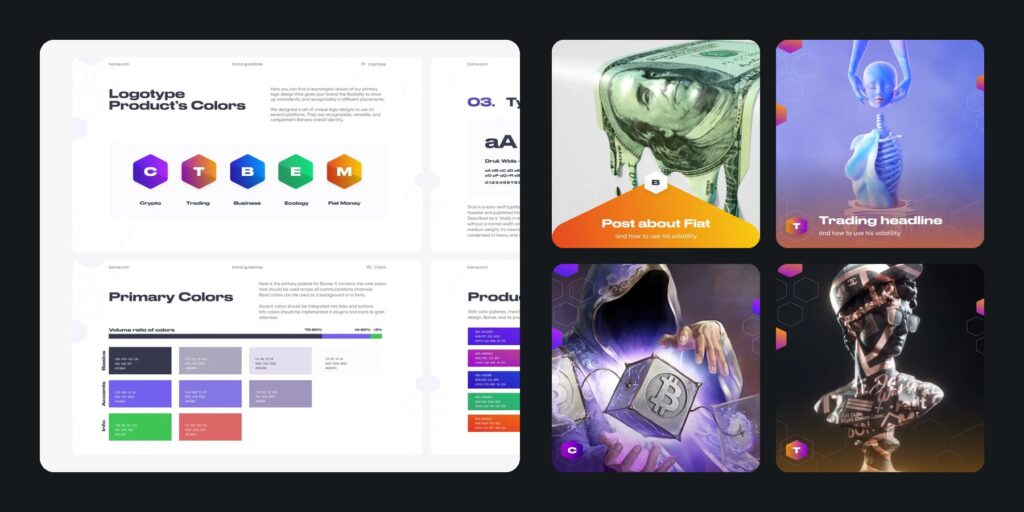
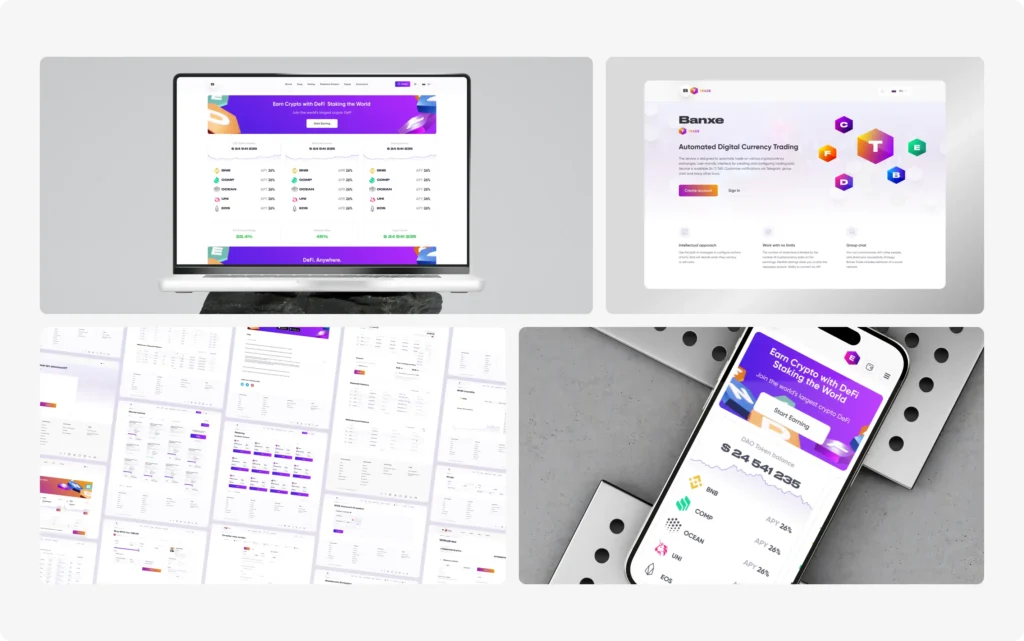
The third point is easier to solve in advance than after the fact. The Banxe identity was drawn as a system that stretches: five product hexagons, Crypto, Trading, Business, Ecology and Fiat Money, each with its own gradient, so every product line has its place inside one brand instead of needing a brand of its own.
When is a rebrand the wrong answer?
When the problem is somewhere else. A new logo will not fix ads that reach the wrong audience, an offer that does not interest the right one or a product people leave after a week. If the right people click and then leave, look at the message and the landing page first; a rebrand on top of a weak offer only makes the weak offer look newer.
Two more warning signs: the founders are tired of the logo (customers rarely are, since they see it far less often), and a new marketing lead wants to leave a mark. Neither is a change in the company, and both are expensive ways to lose recognition you already paid for.
How to rebrand a company, step by step
- Audit what you have. List every touchpoint, from the app and the website to the cards, decks and email signatures, and find out what customers already recognise: a colour, a symbol, a mascot, the name itself. Decide what stays before anything is designed.
- Redefine the positioning. Whom the company is for, what it promises and against whom. The identity follows the positioning, not the other way round.
- Decide about the name. Keep it, adjust it or replace it. Check trademarks, domains and social handles before anyone falls in love with a candidate.
- Design the identity as a system. Logo, colours, type, icons, imagery and motion, tested on real screens: the app, the site, a deck slide, a social post.
- Write it down. Brand guidelines, sometimes called a brandbook, so the product team, the agency and the sales team apply it the same way.
- Plan the rollout. An inventory of touchpoints, an order of work and one switch date, so the old and new identities do not live side by side.
- Tell customers. Before the switch and on the day: what changes, what stays the same and where the official links are.
- Measure. Branded search, direct traffic, how customers describe the company and how many support questions ask whether you are still the same company.
What to keep: the assets customers already recognise
A rebrand is not a clean sheet. The colour, the symbol or the character people already associate with you is brand equity, and throwing it away means paying again for recognition you already have. The best refreshes find a new job for the old assets.
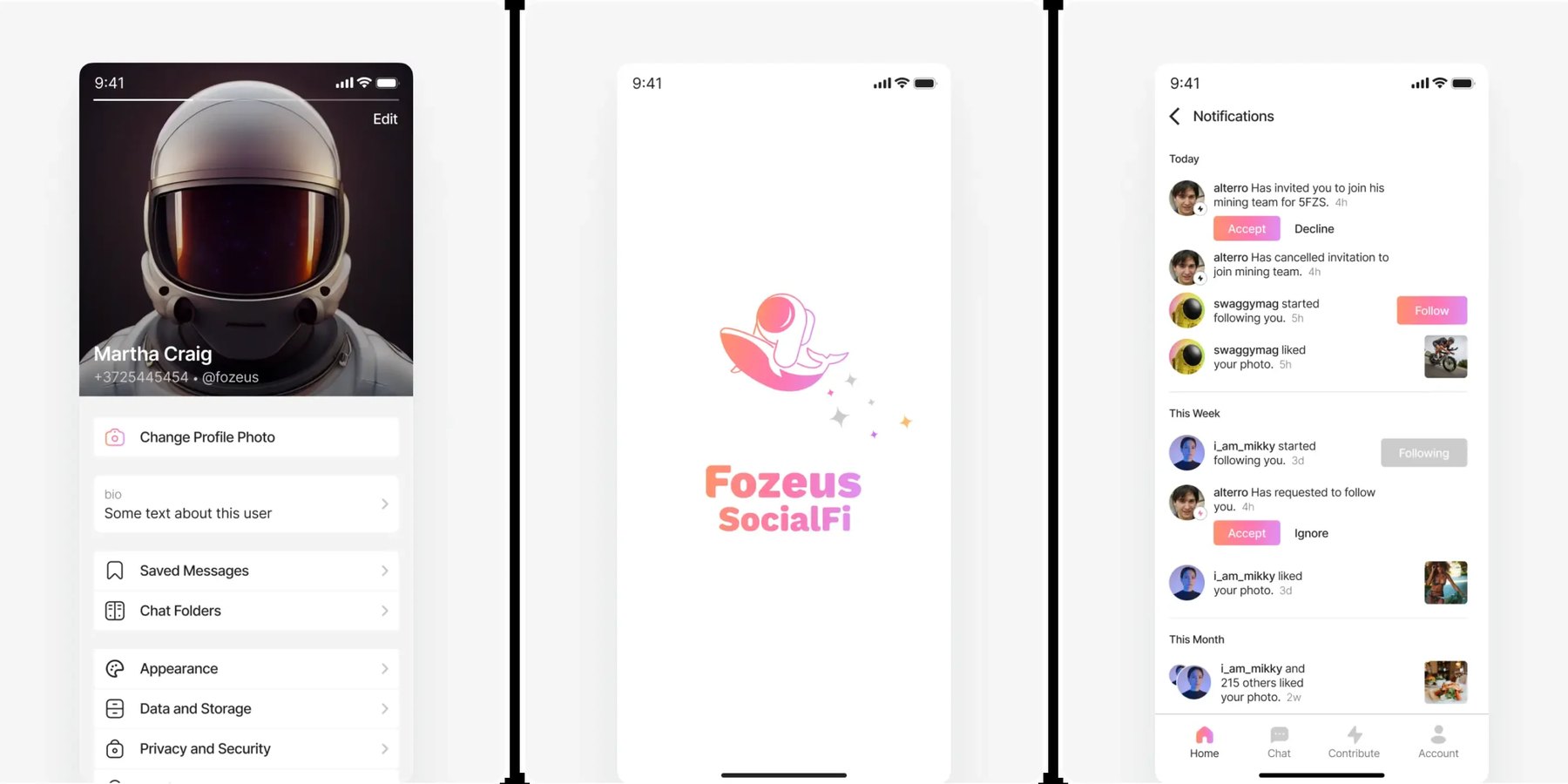
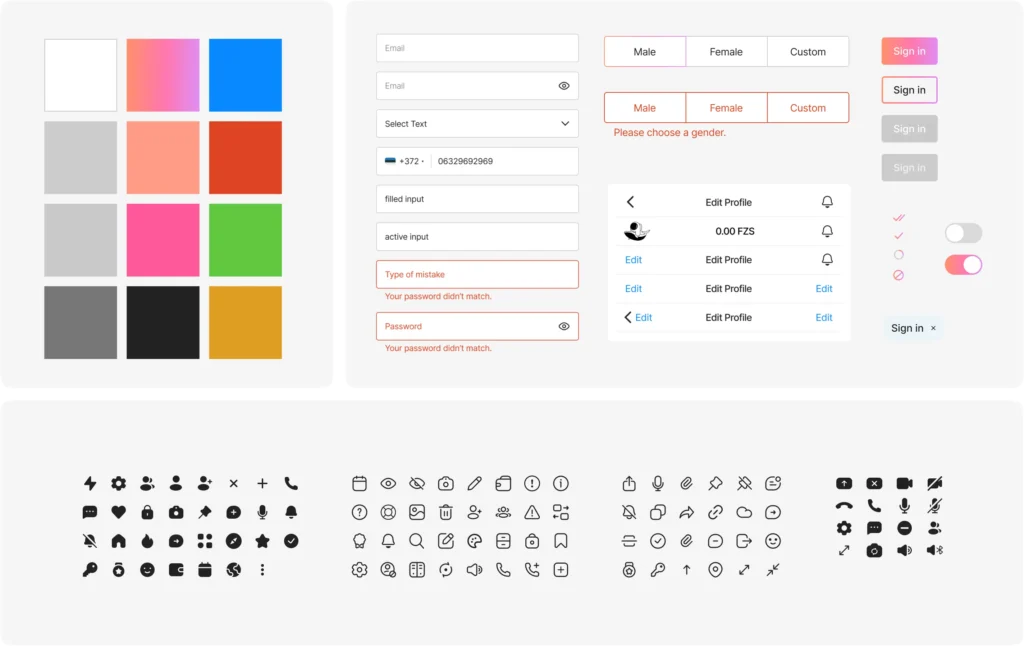
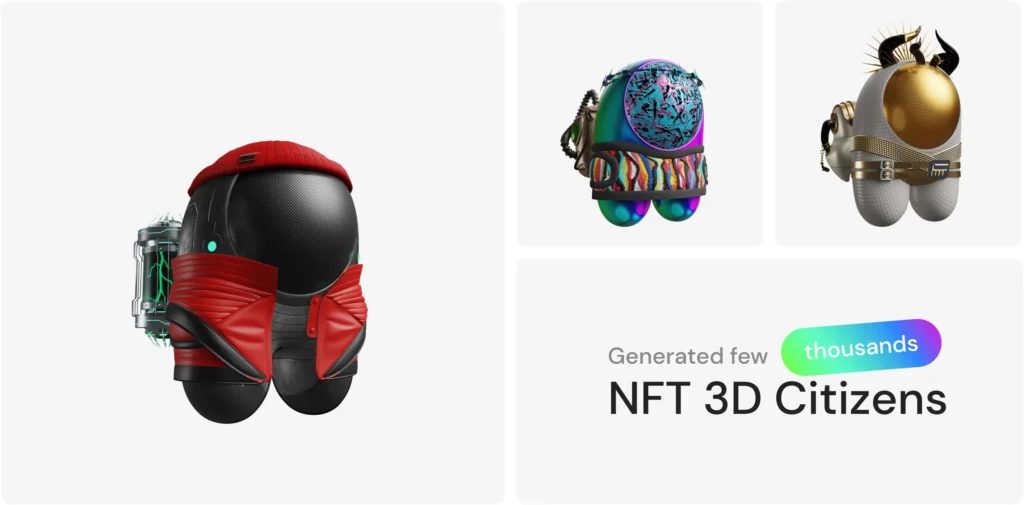
For Fozeus, a crypto social network where members mine the FZS token, the brand refresh went together with the web and mobile app design. The coral-to-lilac gradient of the astronaut-on-a-whale logo got one job in the product: it marks only the key actions, such as Start mining, Sign in and Publish, while the screens stay on white and pale grey. The astronaut became the base for a cast of 3D NFT characters: every one shares a rounded capsule body, a glossy visor and a pack on the back, and wardrobe and finish carry the variation. Keeping the base fixed is what made generation practical, and the series was generated in the thousands.
The rollout checklist: what to change on the same day
Customers lose trust when the app says one name and the email says another. Change everything on one date, and prepare the slow items early.
- Website, favicon, social sharing images and email templates.
- App icon, app store listings and screenshots; store review takes time, so submit before the switch.
- The product itself: logo, colours, onboarding, transactional emails and receipts.
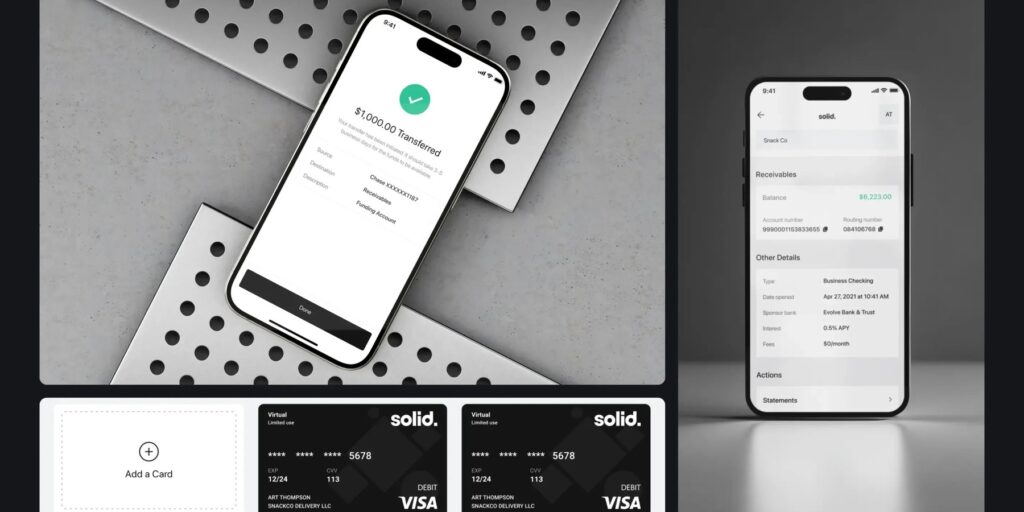
- Payment cards and anything printed. Cards are reissued on a schedule, so plan when the new design reaches customers.
- Social profiles, avatars, covers and post templates.
- Pitch deck, sales deck, one-pagers, document templates and email signatures.
- For crypto projects: the token logo on block explorers, the listings on CoinGecko and CoinMarketCap, wallet asset lists and exchange pages, each with its own update process and lead time.
- Search and AI assistants: page titles, the organisation name and logo in structured data and your business profiles; if the domain changes, 301 redirects from every old URL and a change of address in Google Search Console.
- Legal and partners: the registered name, banking and payment partners, the app store developer name. Check the order with your lawyer.

How do you keep customers through a rebrand?
Tell them before they notice. Announce the change through the channels customers already trust, explain the reason in one sentence and say plainly what stays the same: their account, their money, the app they use and how to reach support. For a while, write “formerly” next to the new name wherever people might search for the old one.
In finance and crypto, a rebrand is also a window for impersonators: scammers register look-alike names and post fake “migration” links while customers are still unsure which brand is real. Publish one page with the official links, repeat it in every announcement and never ask customers to move funds or reconnect wallets because of the rebrand.
Keep the search traffic too. If the domain stays, keep the URLs and change titles and structured data. If it changes, redirect every old address to its new counterpart and keep the redirects for good. Branded searches for the old name will continue for months, so make sure they land on a page that explains the change.
How thelegacy works on rebrands
thelegacy is an independent design studio working since 2012, mostly with fintech, crypto and tech companies. We design the brand identity and carry it into the product, the website and the pitch deck ourselves, so a refresh does not stop at the logo and the old identity does not survive in half the screens.
See our brand identity work, including Fozeus, Banxe and Levens, or tell us about your company and what has changed in it.
Key takeaways
- Rebranding changes how a company is known: its positioning and usually its visual identity, sometimes its name, and it is worth doing when the company has outgrown its brand.
- Choose the smallest change that solves the problem: a refresh keeps the name and positioning, a partial rebrand changes identity and messaging, a full rebrand changes the name as well.
- A rebrand will not fix weak targeting, a weak offer or a product people leave; check the message and the landing page first.
- Keep what customers already recognise, a colour, a symbol, a character, and give it a new job instead of throwing it away.
- Change every touchpoint on one date, tell customers what stays the same and where the official links are, and keep old URLs redirected so search traffic follows.
Frequently asked questions
What is rebranding?
Rebranding is a deliberate change to how a company is known: its positioning and usually its visual identity, sometimes its name. It is worth doing when the company has changed, for example its product, its audience or its ownership, and the brand no longer describes it.
What is the difference between a rebrand and a brand refresh?
A refresh updates the identity, such as logo details, colours, typefaces and imagery, while the name and positioning stay. A rebrand changes the positioning and messaging too, and a full rebrand also changes the name. The bigger the change, the more recognition and search traffic you put at risk.
When should a company rebrand?
When the company has changed and the brand has not followed: new products or customers, a merger, an identity that cannot stretch to new product lines, a name that causes trademark or market problems, or a look so dated or generic that it costs trust on the first screen.
How do you rebrand without losing customers?
Keep the assets customers already recognise, change every touchpoint on the same date, announce the change through channels customers already trust, say plainly what stays the same, and publish one page with the official links. In finance and crypto, warn customers that the rebrand will never ask them to move funds.
Does a rebrand hurt SEO?
Not much if the domain and URLs stay: update titles, structured data and business profiles. If the domain changes, redirect every old URL to its new counterpart with a 301, keep the redirects for good and file a change of address in Google Search Console. Searches for the old name continue for months, so give them a page that explains the change.
How long does a rebrand take?
It depends on the scope. A refresh of the identity is the shortest; a full rebrand with a new name takes much longer, mostly because of naming, trademark checks and the rollout across every touchpoint rather than the design itself.