fozeus
Thomas and Jury, co-founders of a recently established Estonian crypto-social media platform, approached our organization seeking assistance in revitalizing their visual and brand identity. Dissatisfied with the outdated design implemented by a previous agency, they sought a fresh
and innovative solution to address this concern.
The initial brand visual lacked the desired attention-grabbing elements, exhibiting a somewhat juvenile quality. The overall brand image was outdated, resulting in a lack
of meaningful traffic generation.
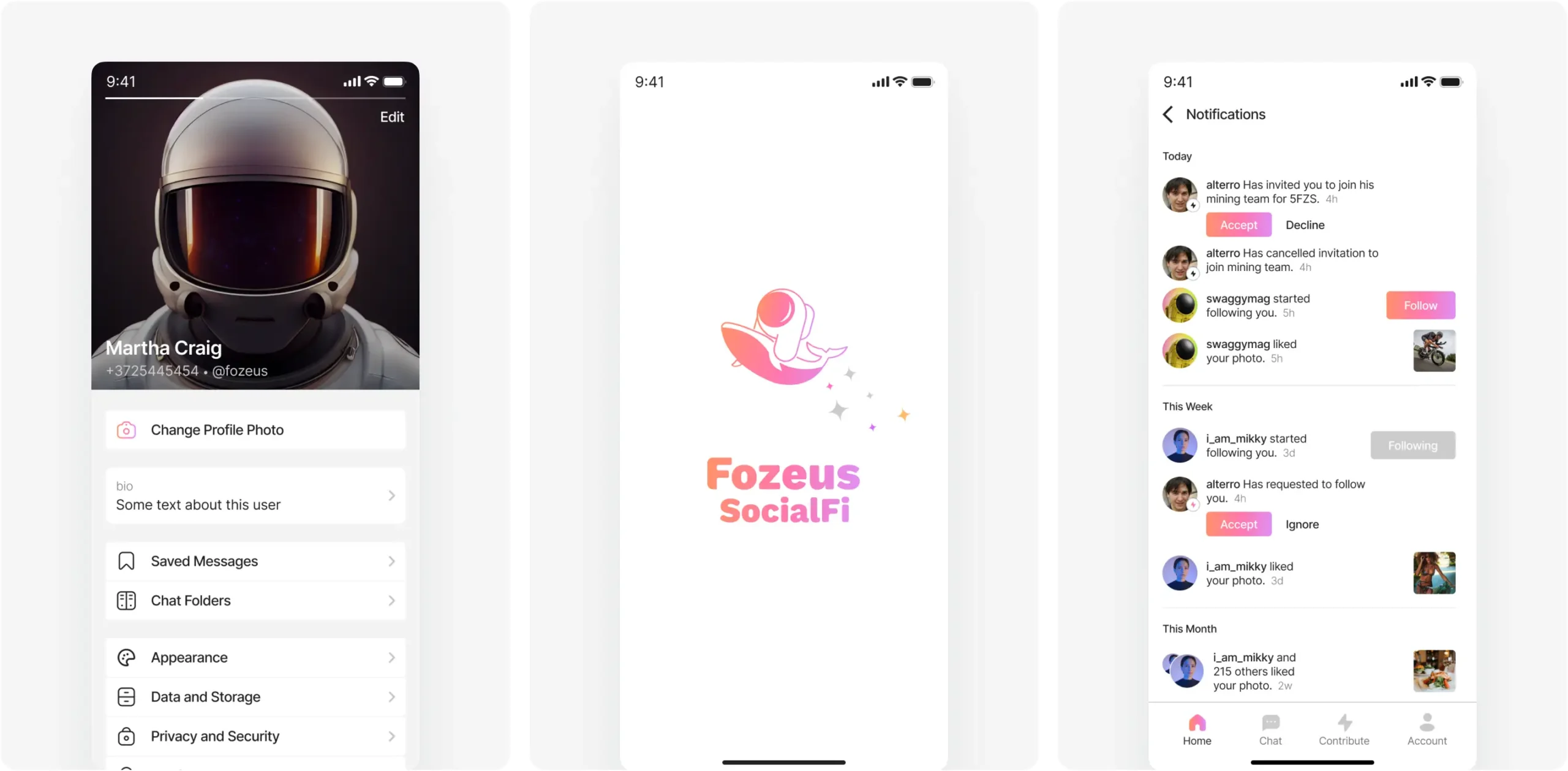
In this instance, we have developed a suite of products, including websites, applications, and pitch decks. We comprehensively restructured and modernized the entire brand aesthetic, introducing a new look and feel.
Our efforts involved extensive research, wherein we meticulously analyzed the functionalities of major competitors. Subsequently, we strategically integrated all valuable and innovative features into a unified ecosystem.
To ensure seamless cohesion, we established a unified Design System that harmonizes all products, ensuring consistency across the entire ecosystem.
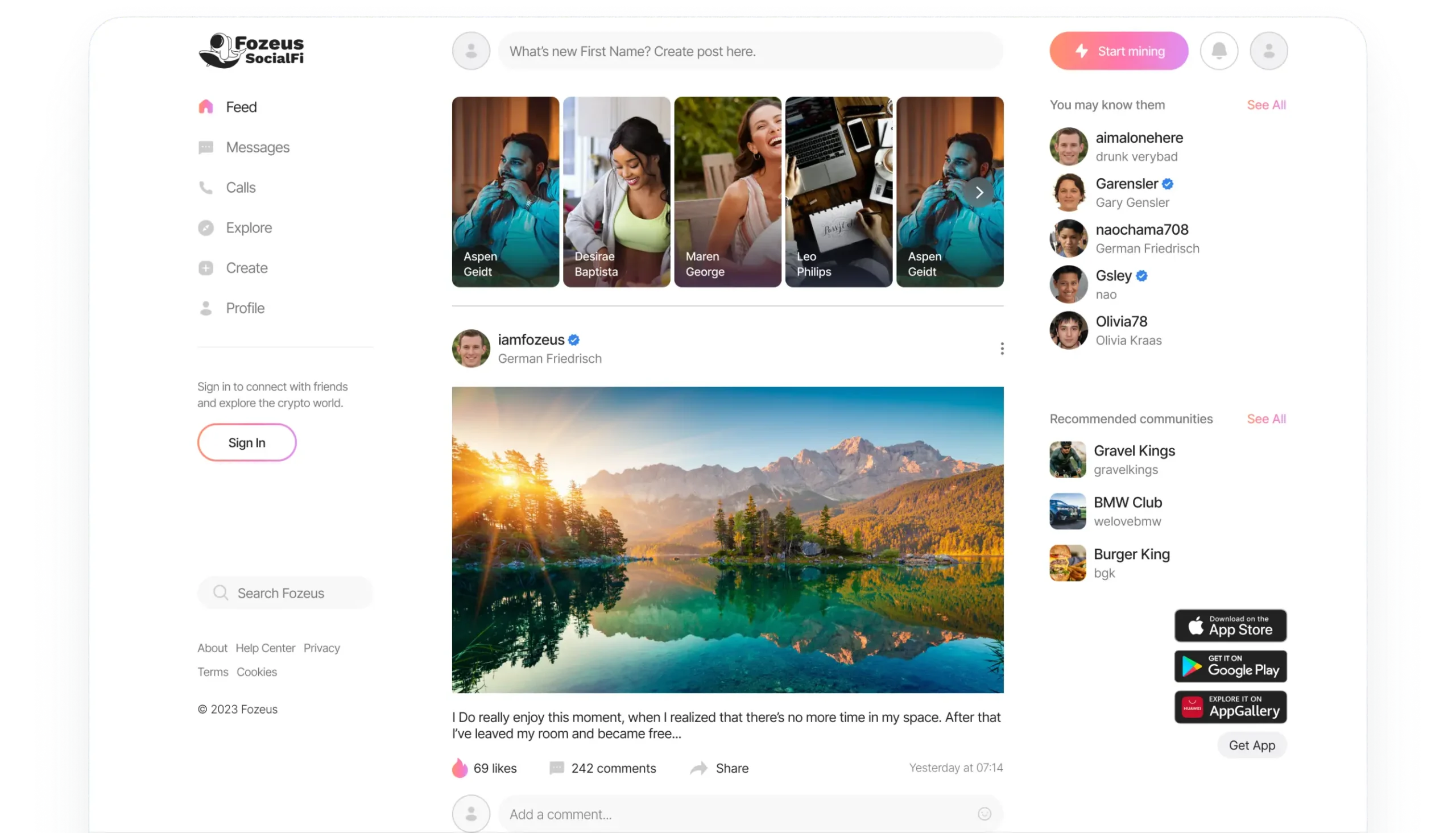
SocialFi web app with feed, stories and communities
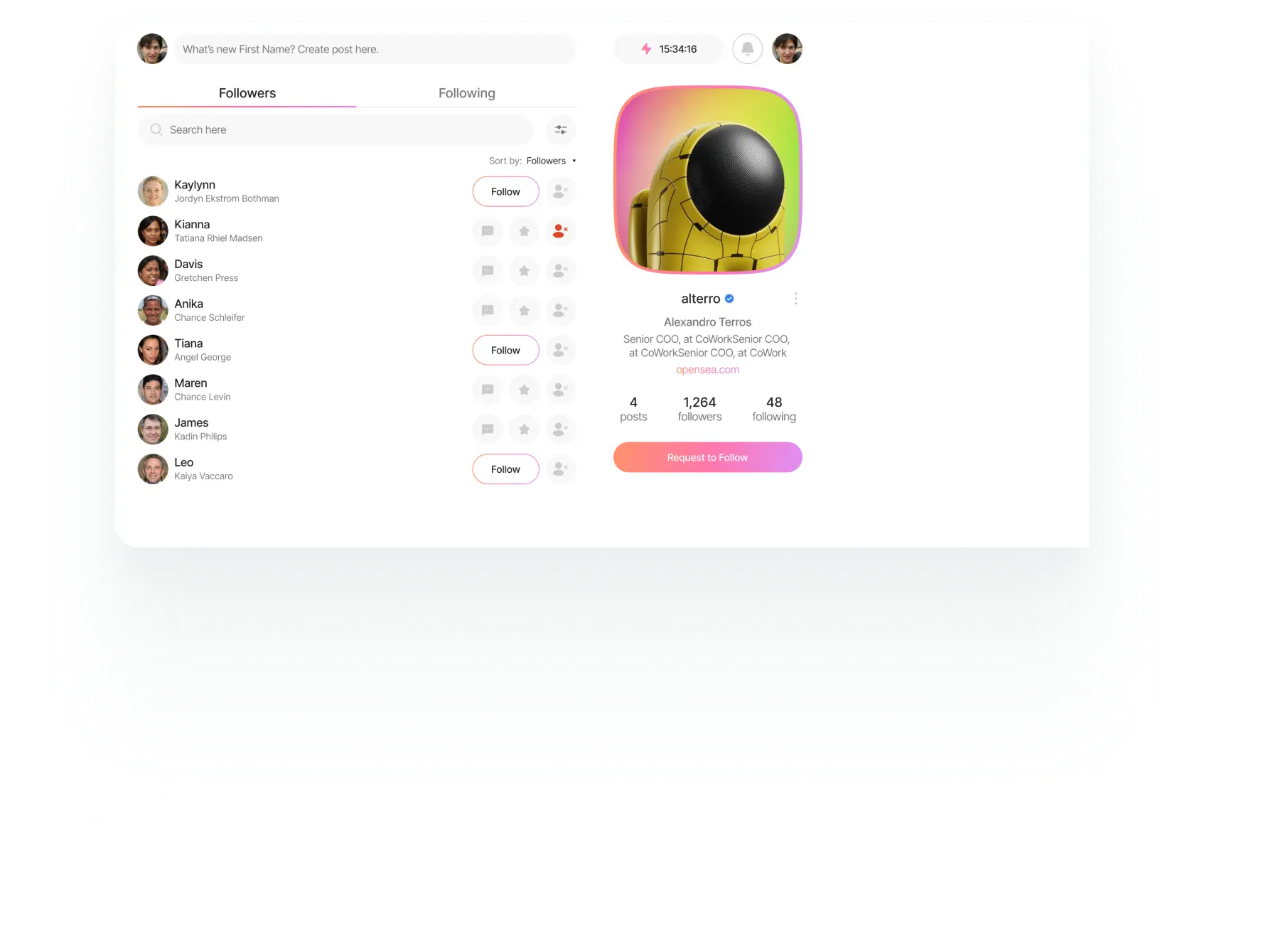
Fozeus SocialFi is a social network where members also mine the FZS token. For the desktop web app we used three columns: a quiet left rail with Feed, Messages, Calls, Explore, Create and Profile; a centre column with the post composer, a stories strip and the feed; and a right rail for people you may know, recommended communities and links to the mobile app stores.
Profiles carry Posts, Articles, Reels, Tagged and Saved tabs, and Communities shows joined groups as photo tiles with Join and Leave controls. Our UX/UI design for this crypto social network stays on white and pale grey, so the coral-to-lilac gradient from the astronaut-on-a-whale logo marks only the key actions: Start mining, Sign in, Publish, Request to Follow.
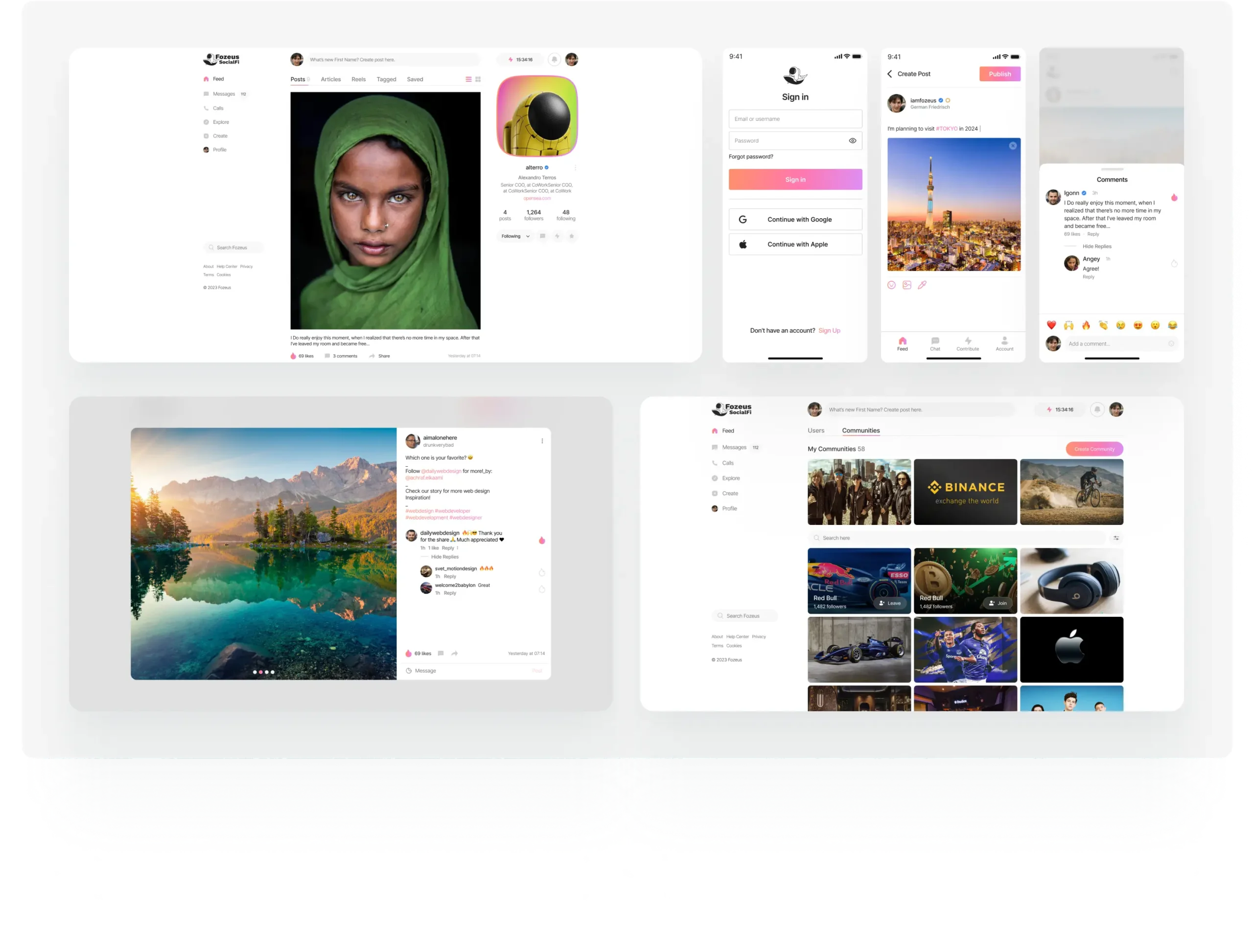
FZS mining dashboard, wallet and settings screens
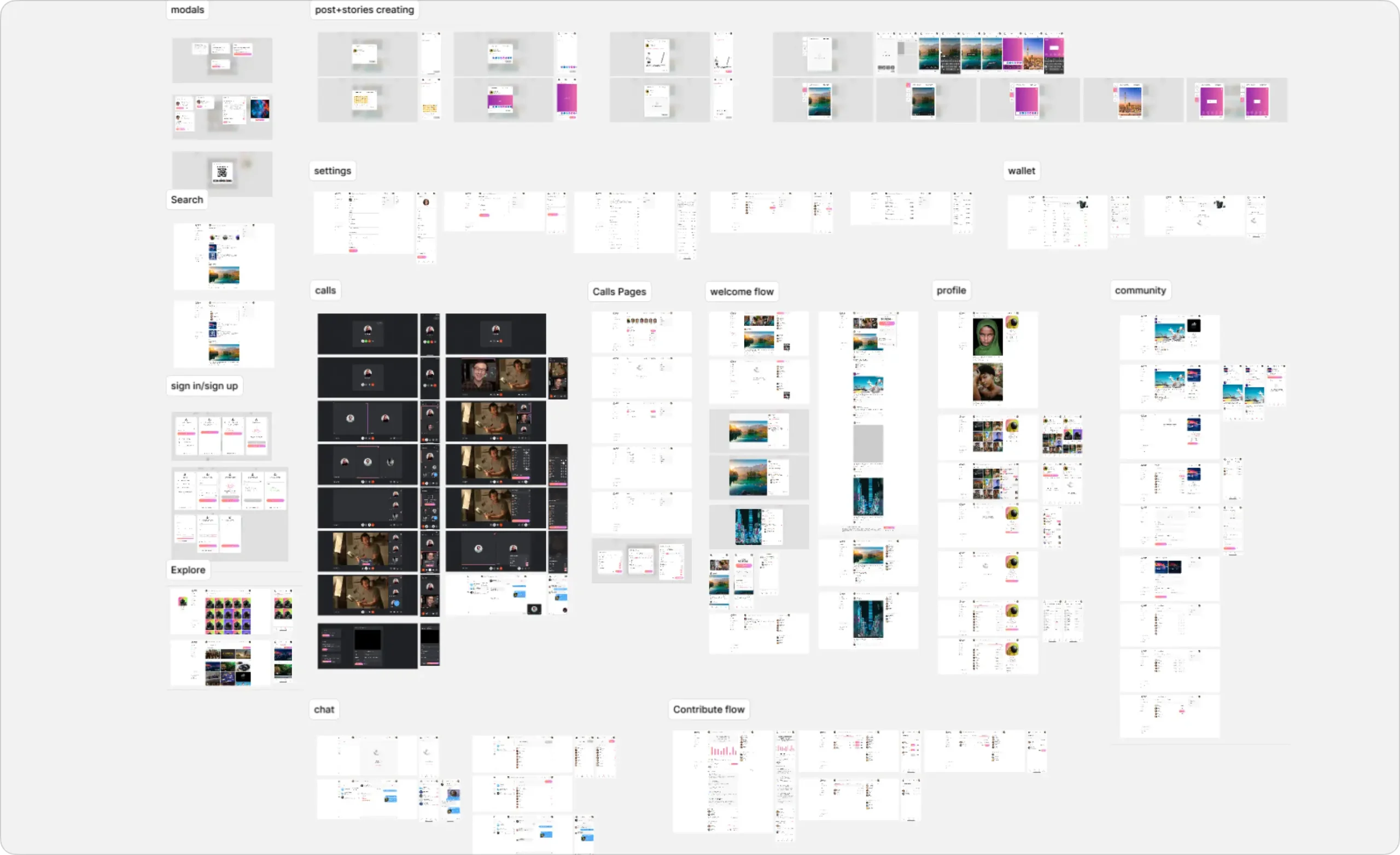
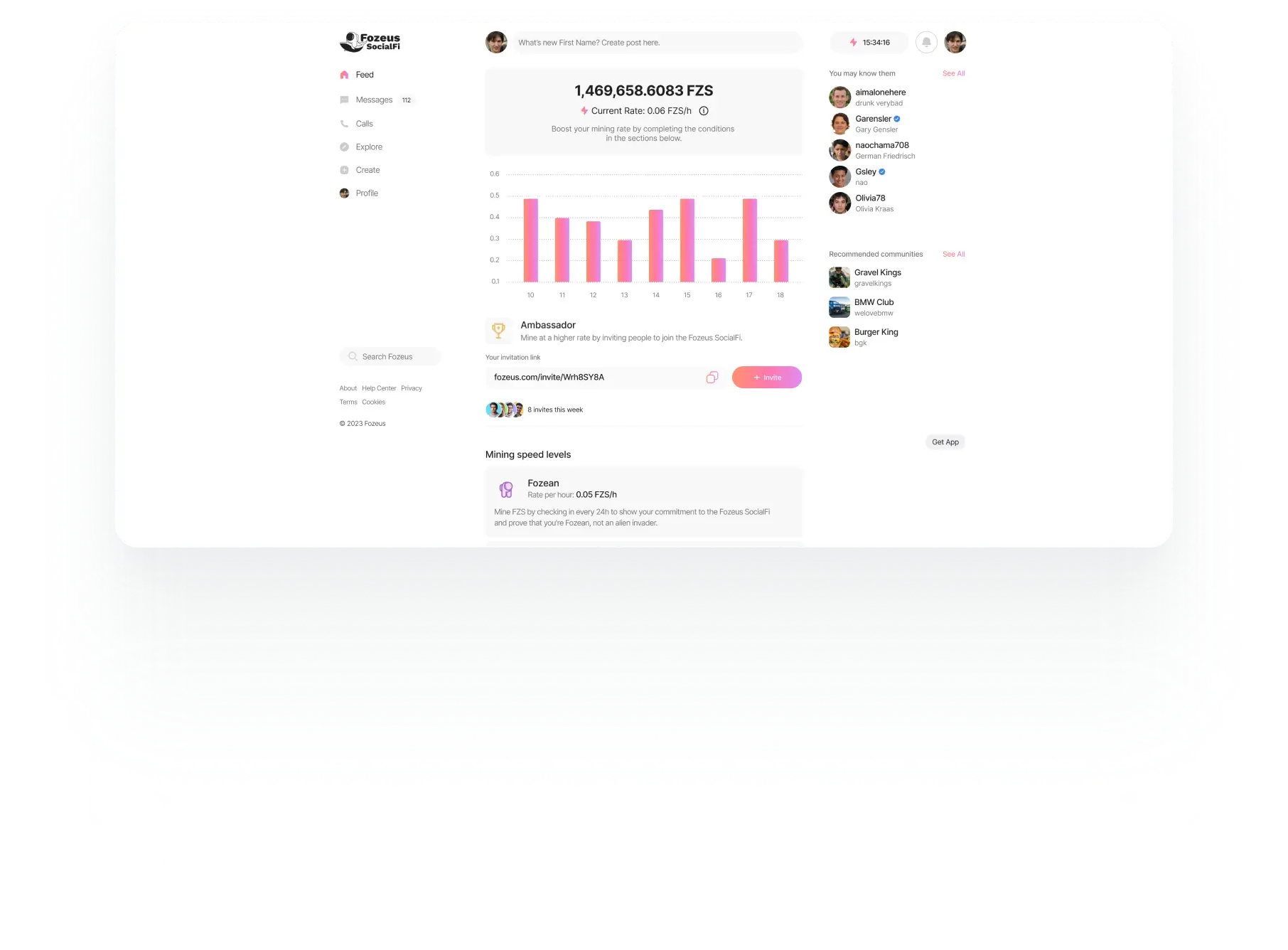
The desktop board is organised into fourteen named flows, from sign in and the welcome flow to calls, community, wallet and contribute. The mining screen leads with the running FZS total and the current rate per hour, then a pink bar chart of daily mining, an Ambassador block with a copyable invitation link, and speed levels that start at the Fozean tier for members who check in every 24 hours. A lightning timer stays in the header on every page, and notifications carry invitations to join mining teams.
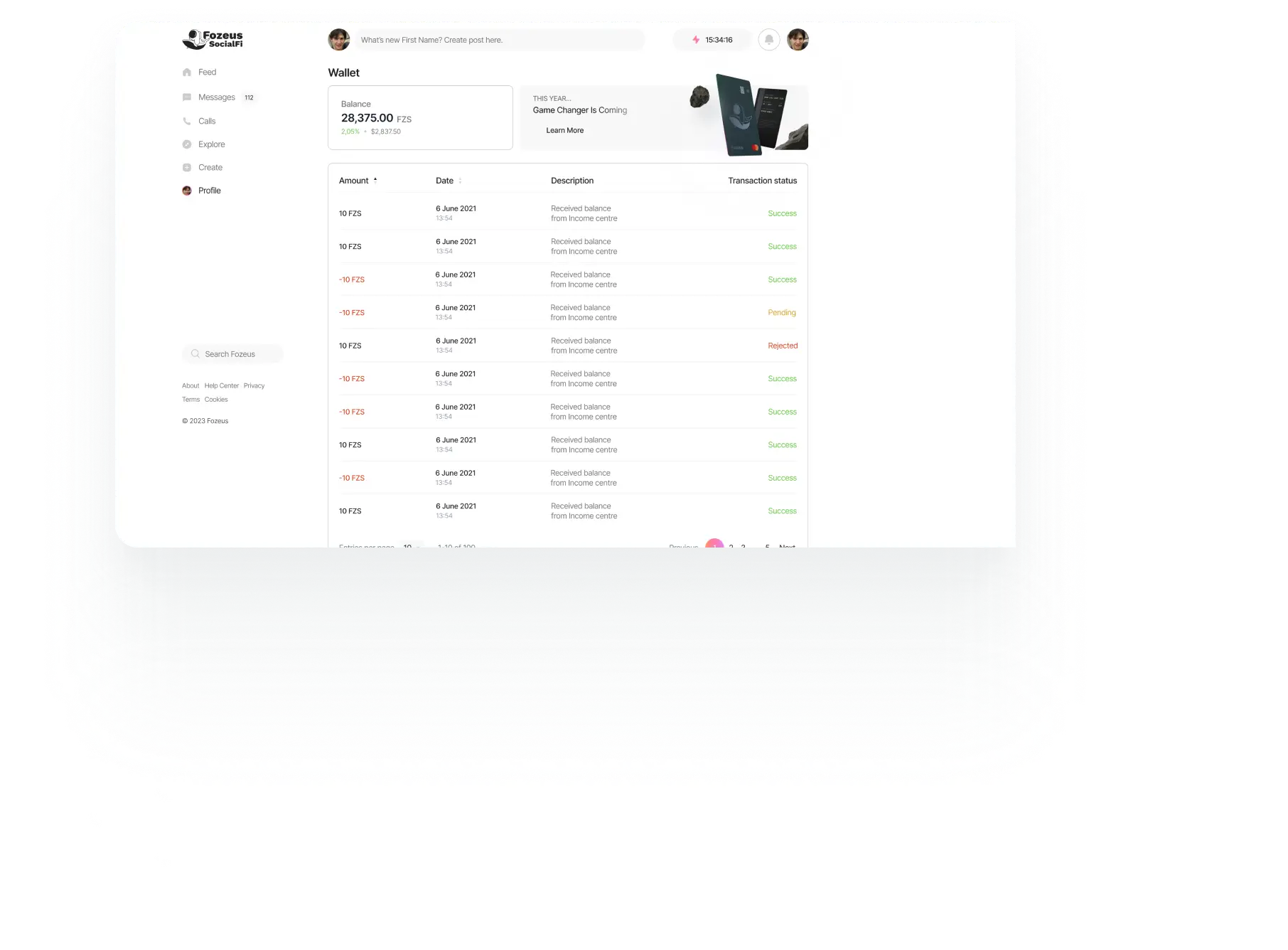
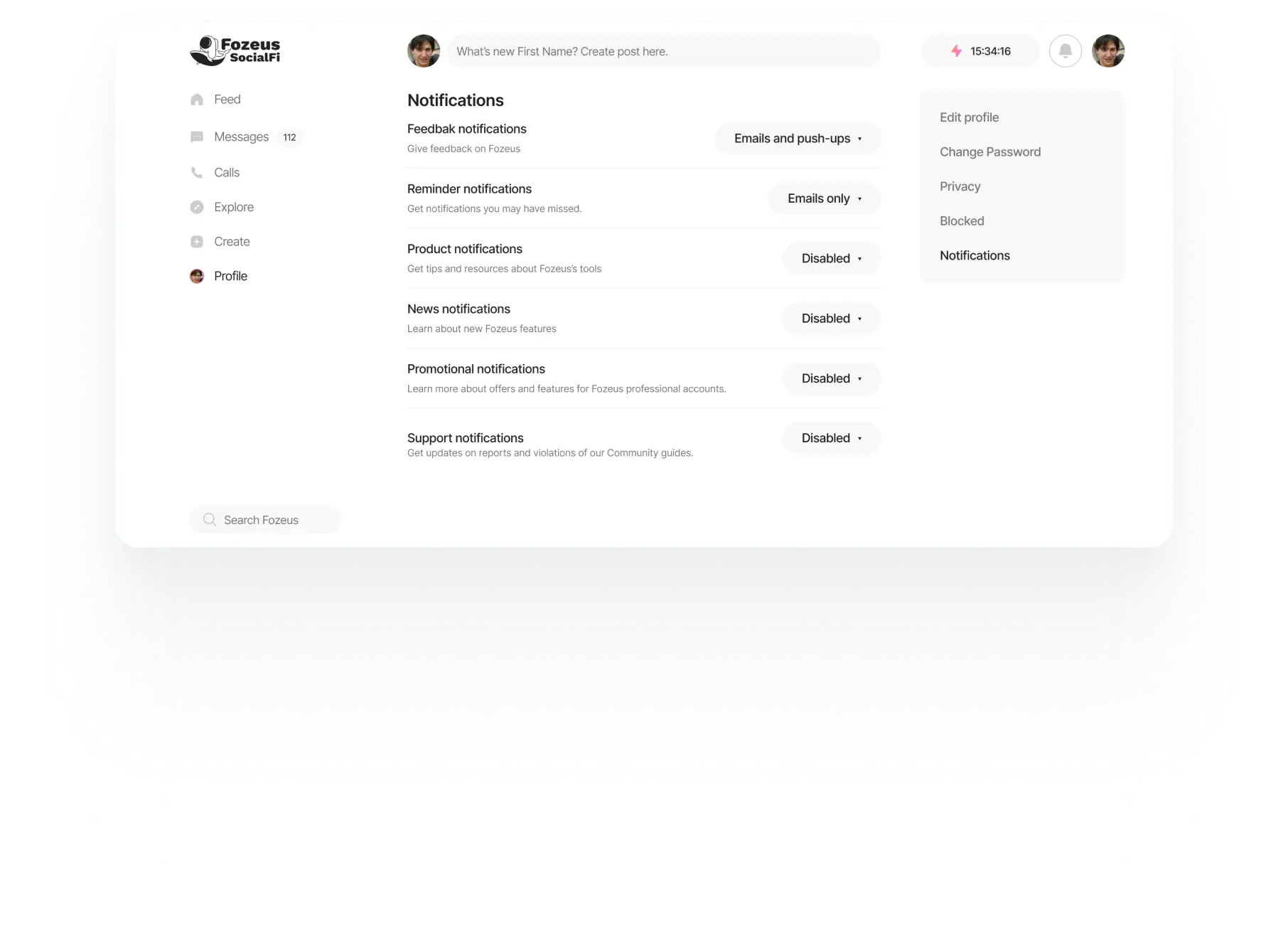
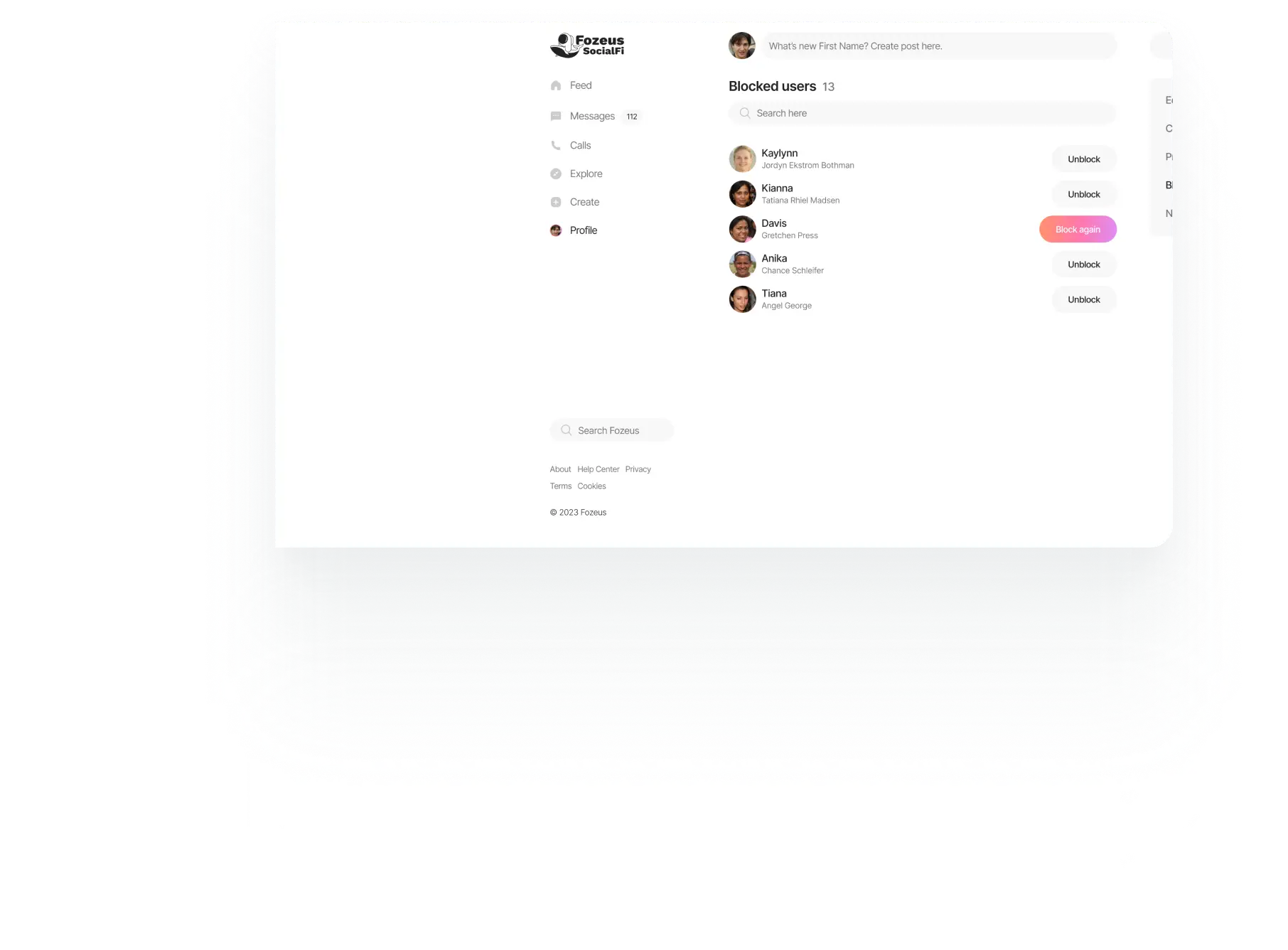
The wallet reads as a plain ledger: a balance card, then amount, date, description and a colour-coded status of Success, Pending or Rejected. Notification settings and blocked users follow the same calm row pattern.
Messenger and video call flows in the mobile app
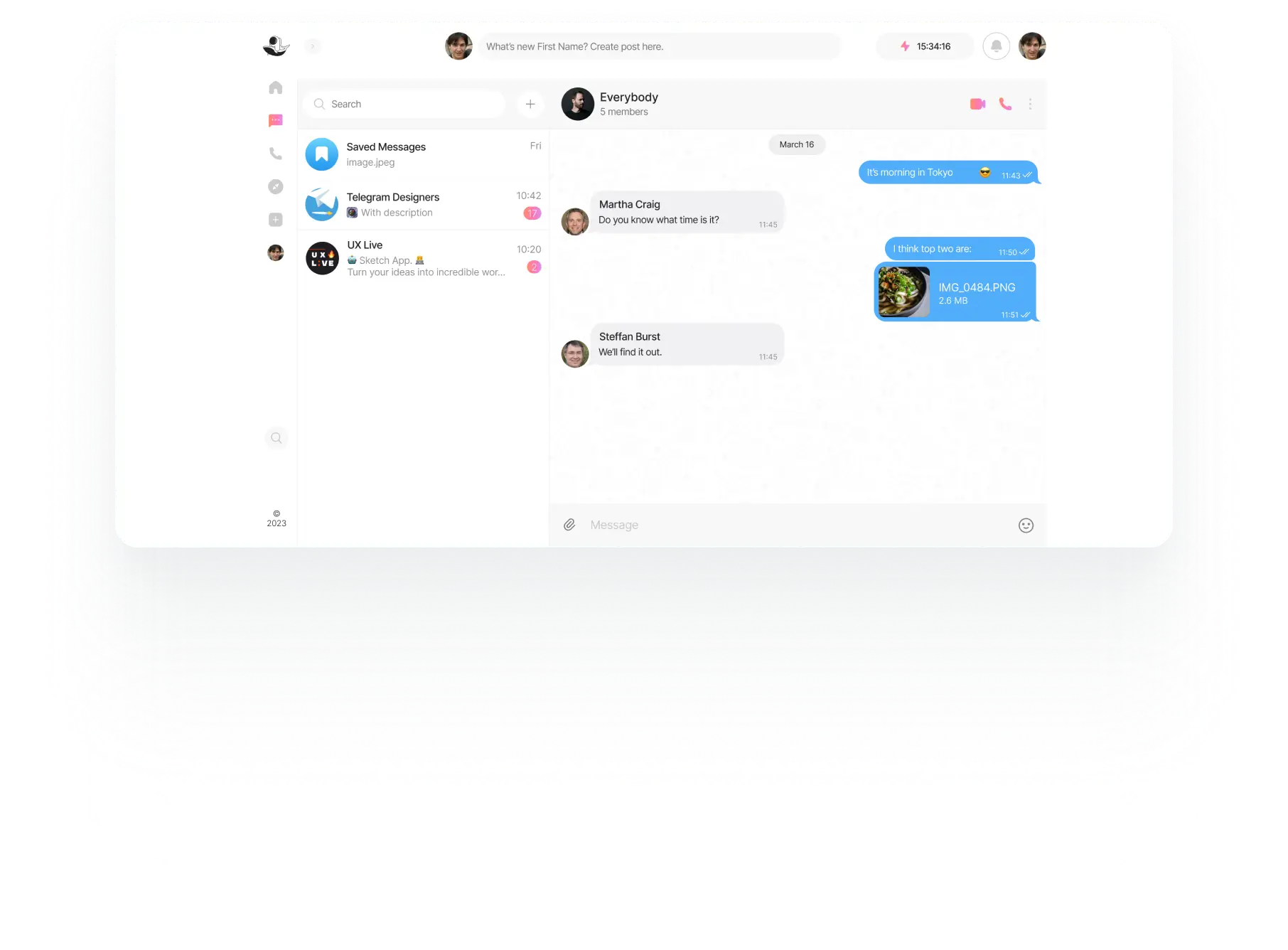
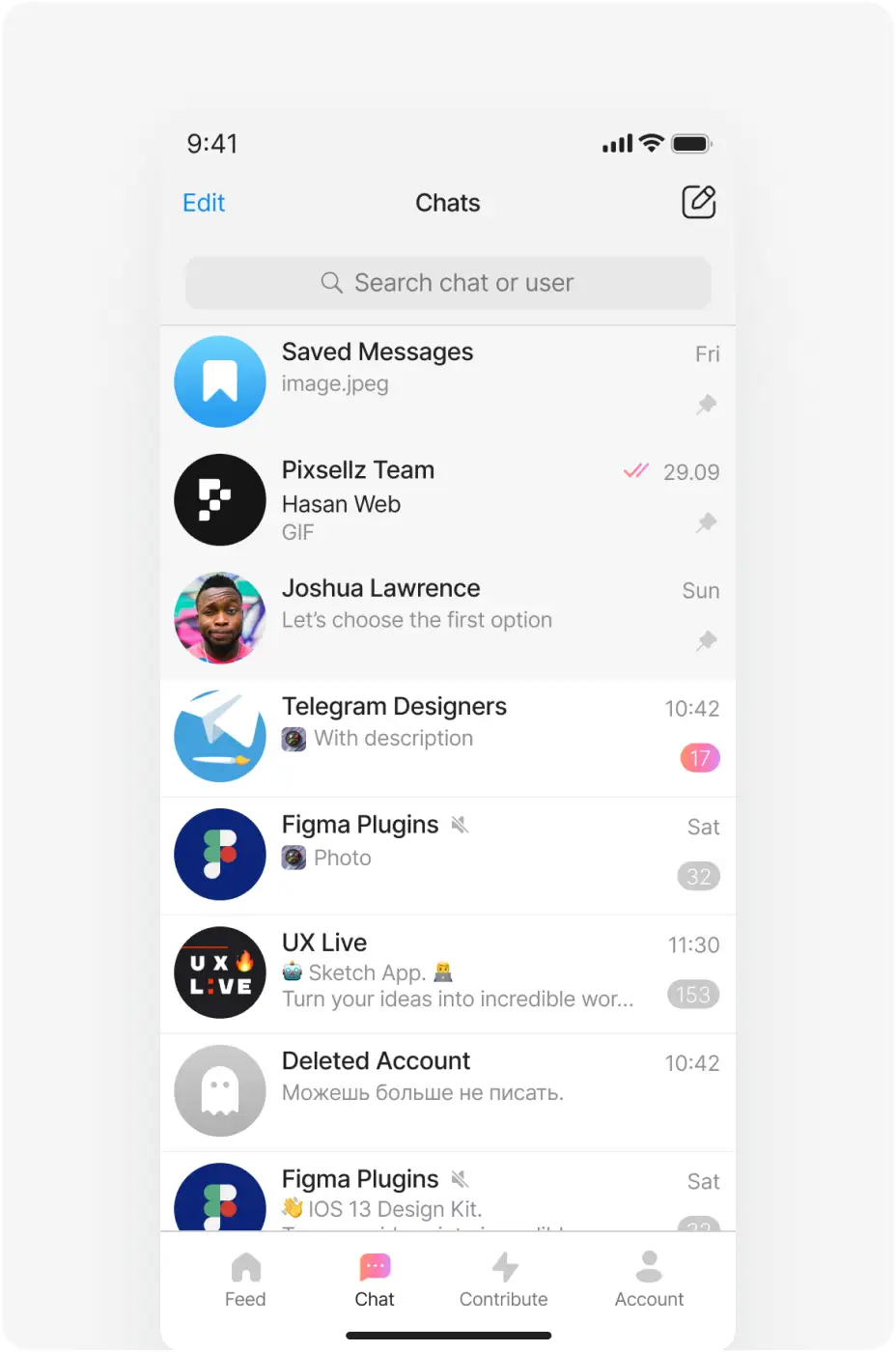
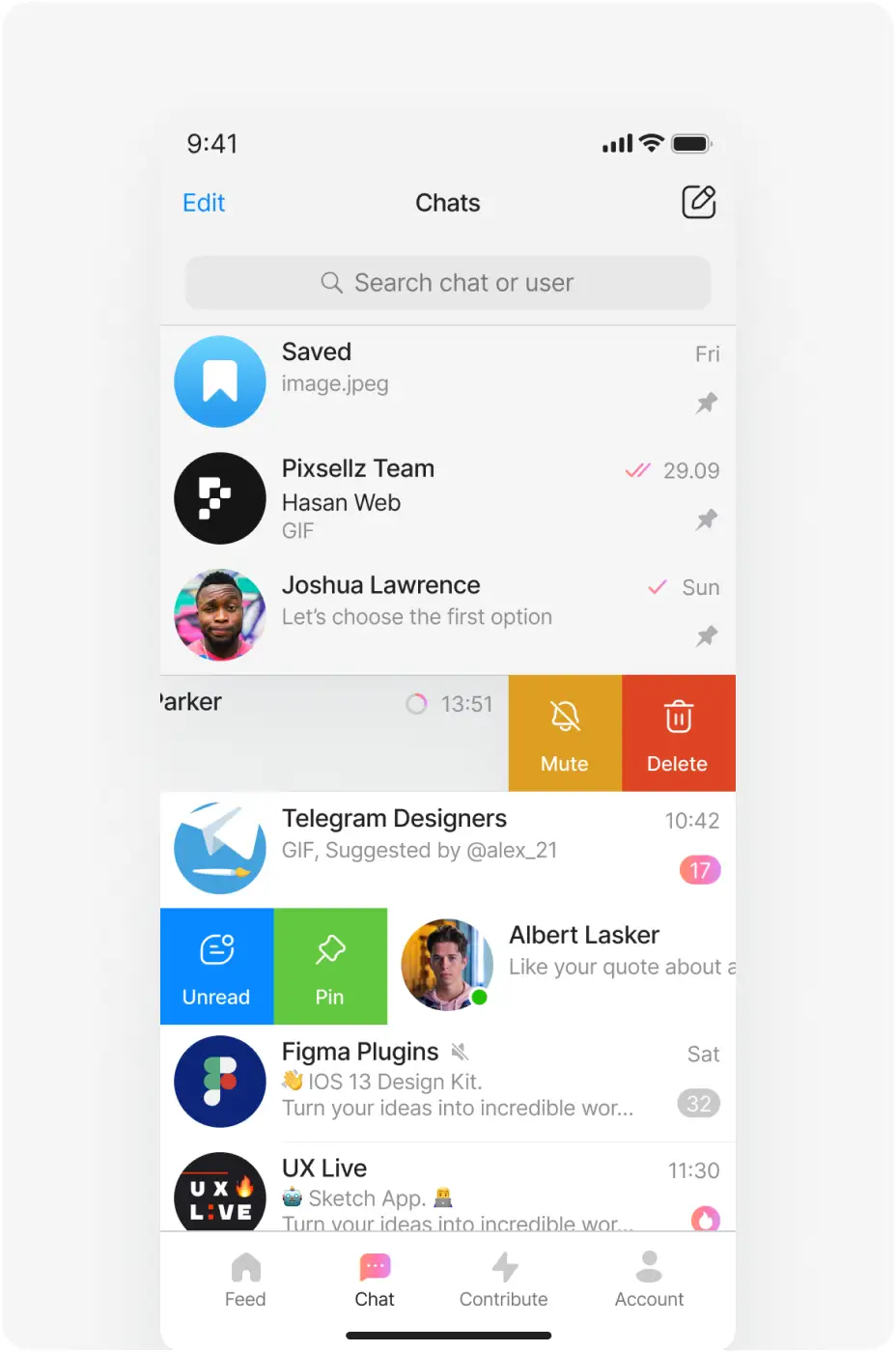
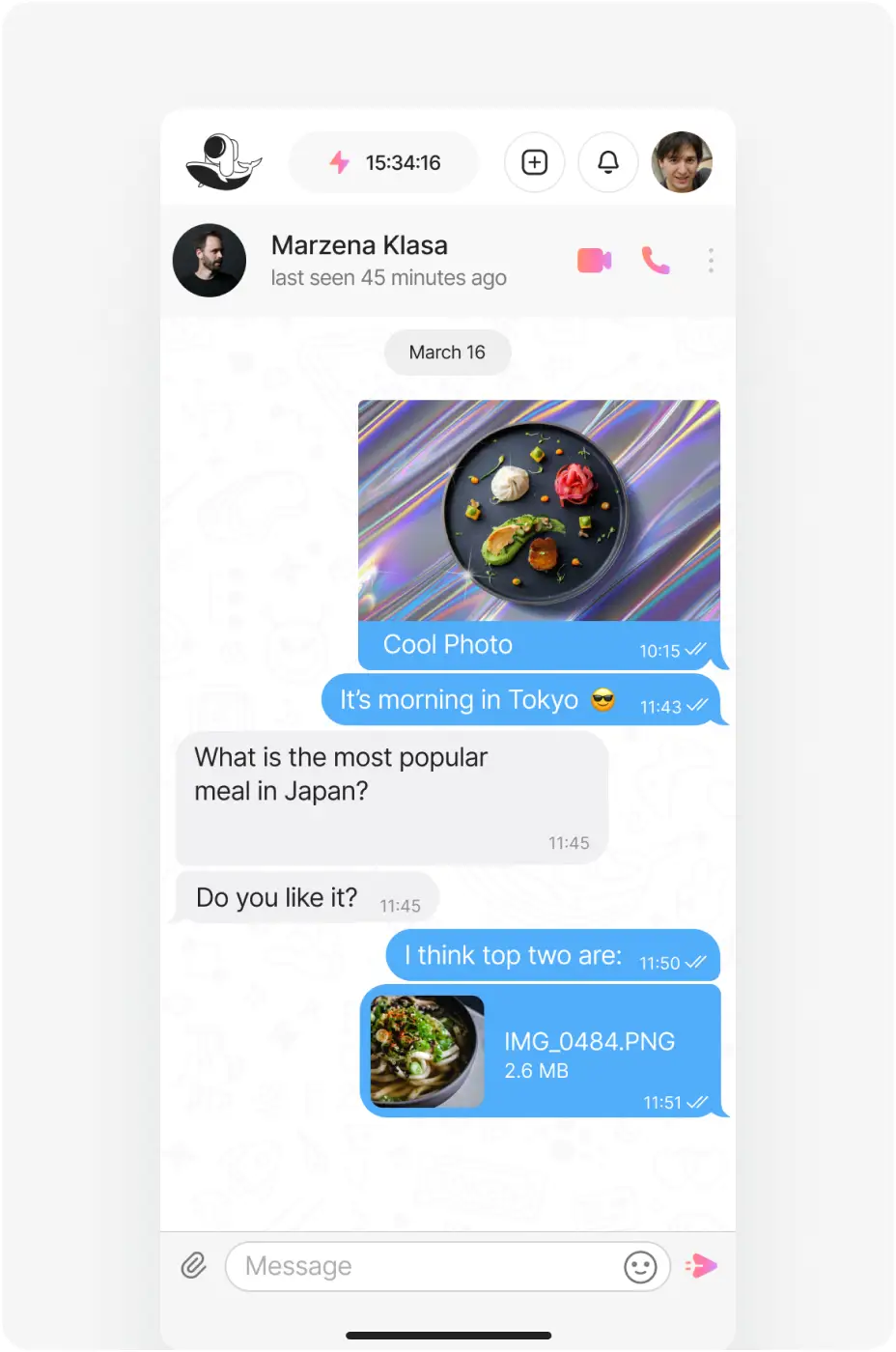
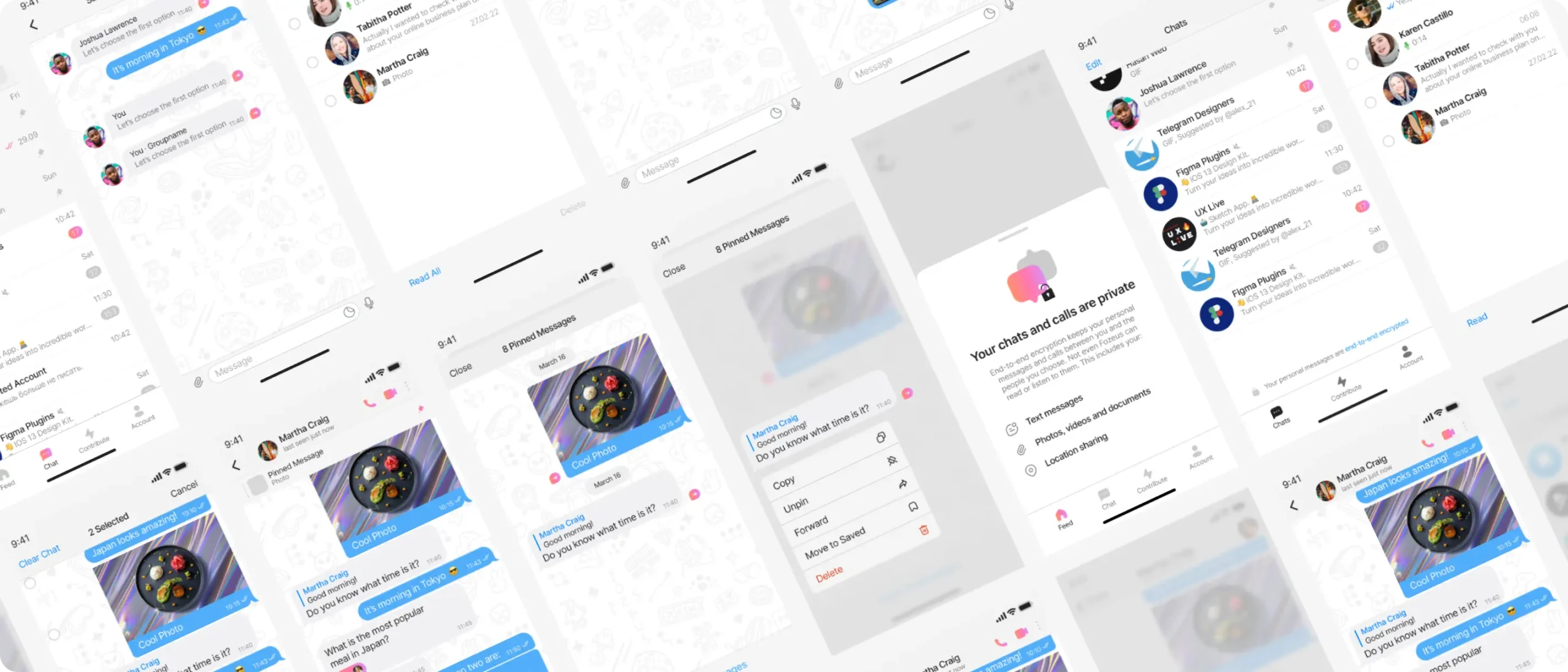
In the mobile app the messenger is worked out down to its gestures. The chat list has search, saved messages, pinned threads and swipe actions for Mute, Delete, Unread and Pin. Inside a conversation, outgoing messages sit in blue bubbles over a light doodle wallpaper, a long press opens Copy, Unpin, Forward, Move to Saved and Delete, and a separate sheet explains that chats and calls are end-to-end encrypted.
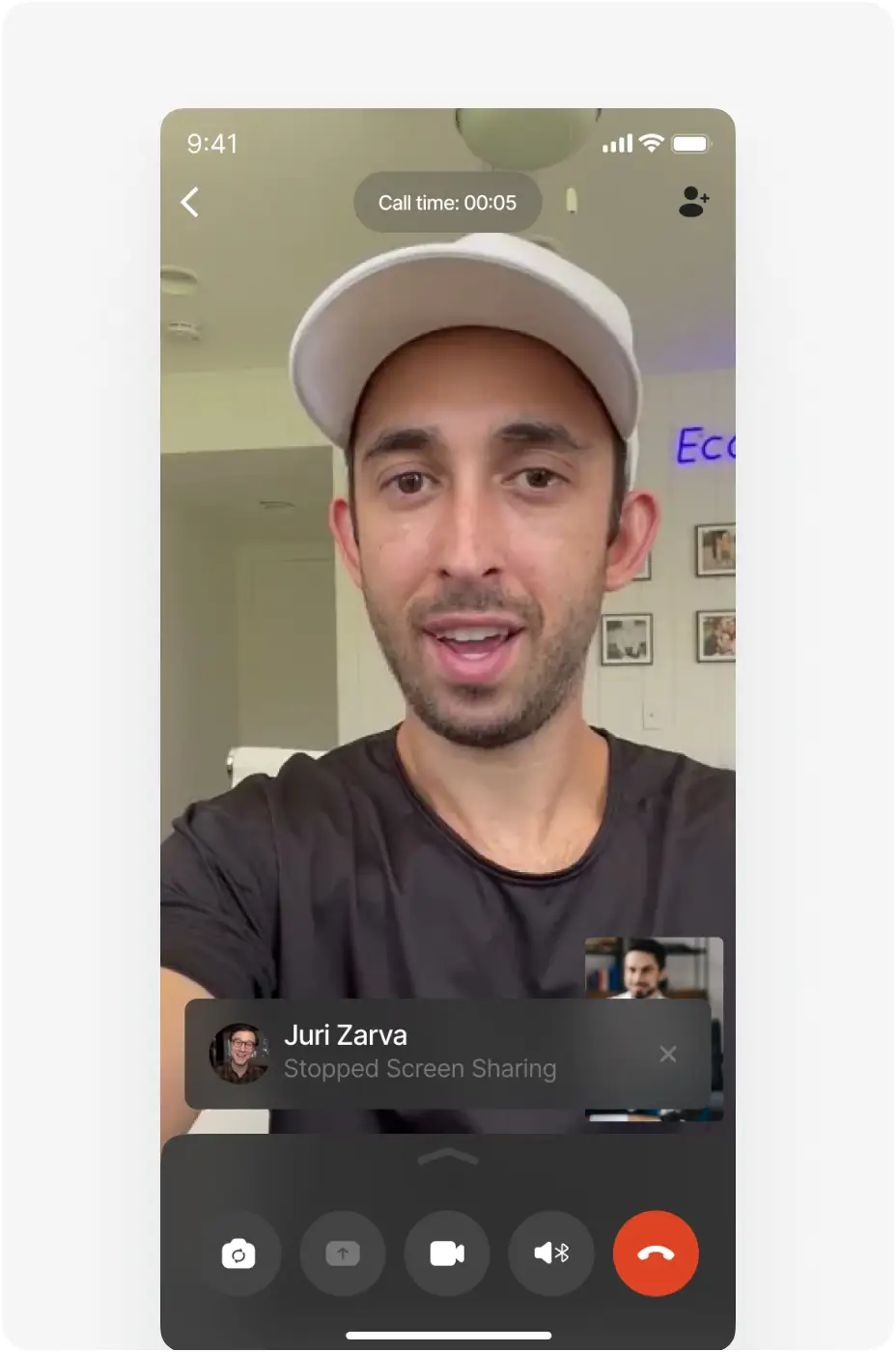
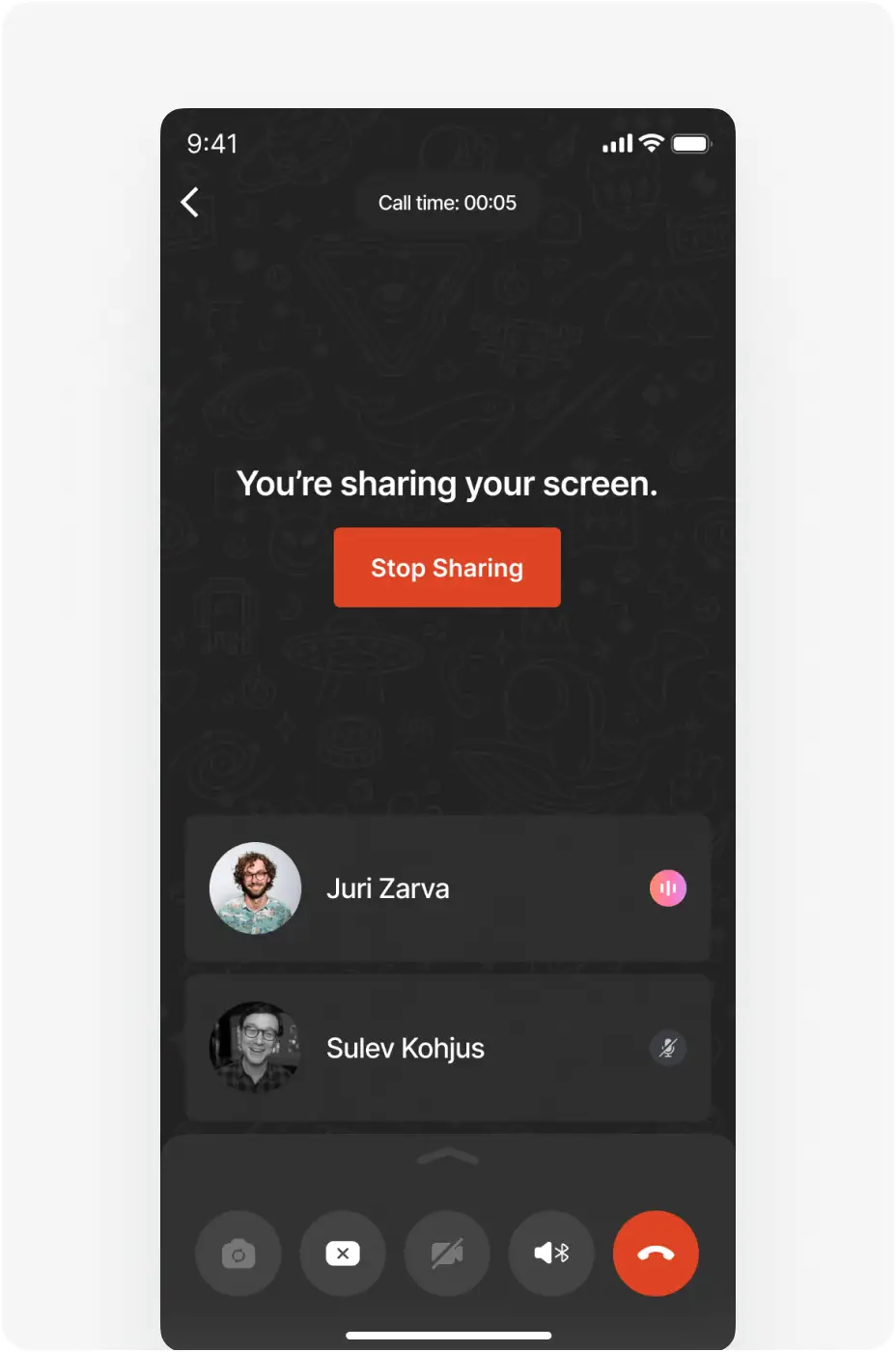
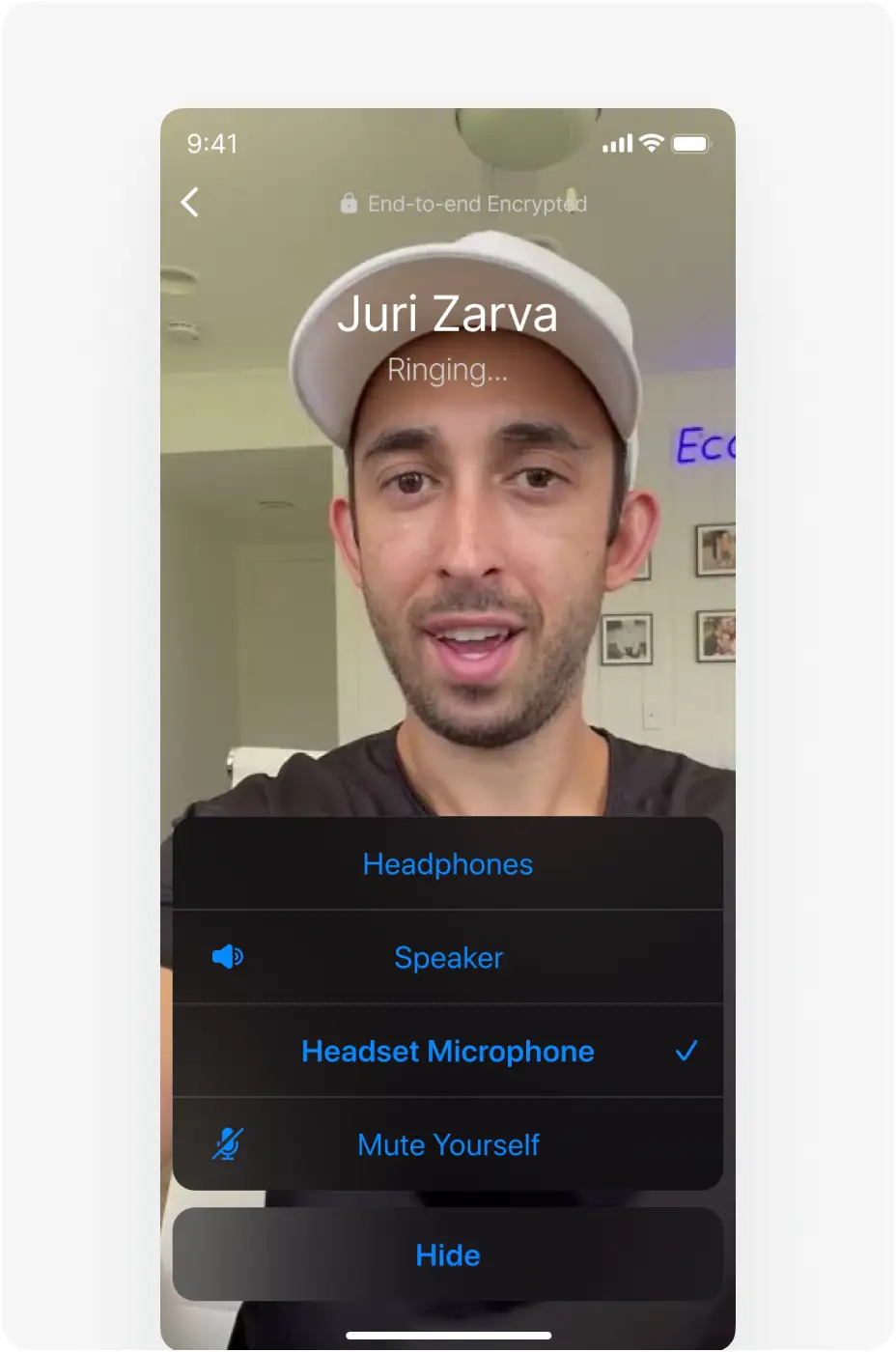
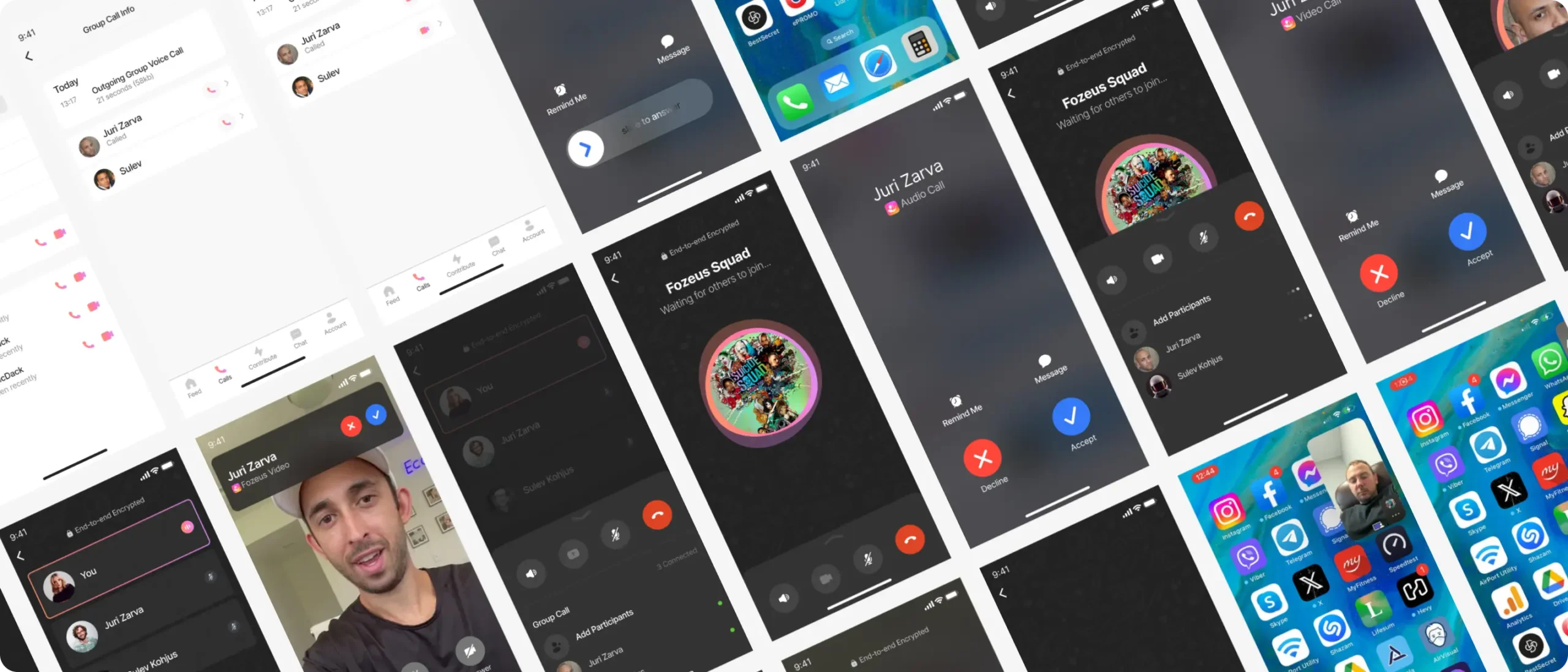
Calls switch to a dark grey surface so video and controls stay readable: one-to-one video with a small second tile, group calls with a participant list, screen sharing with a red Stop Sharing button, an audio output picker, and incoming-call cards with Remind Me and Message shortcuts.
UI kit, onboarding and the complete mobile screen map
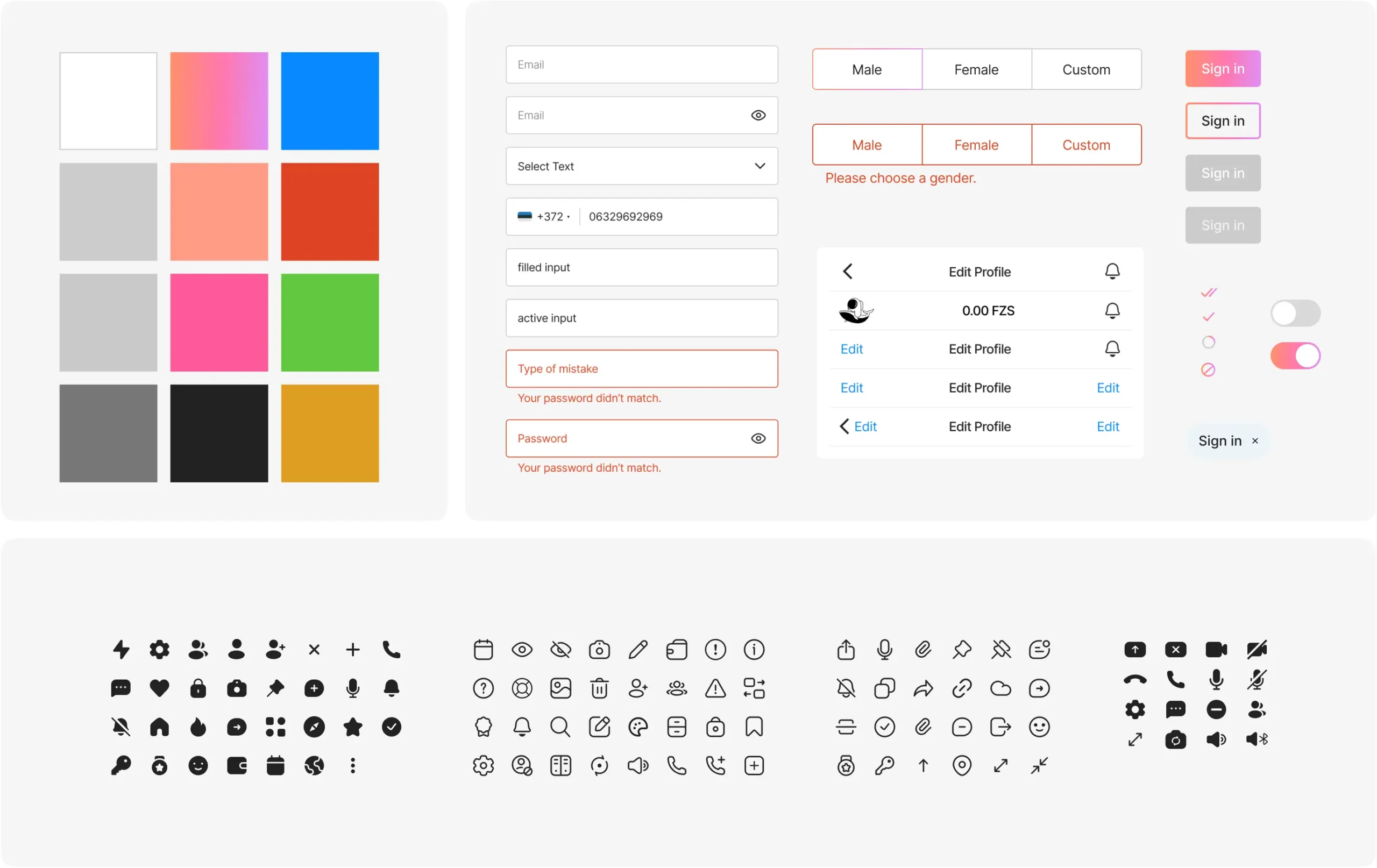
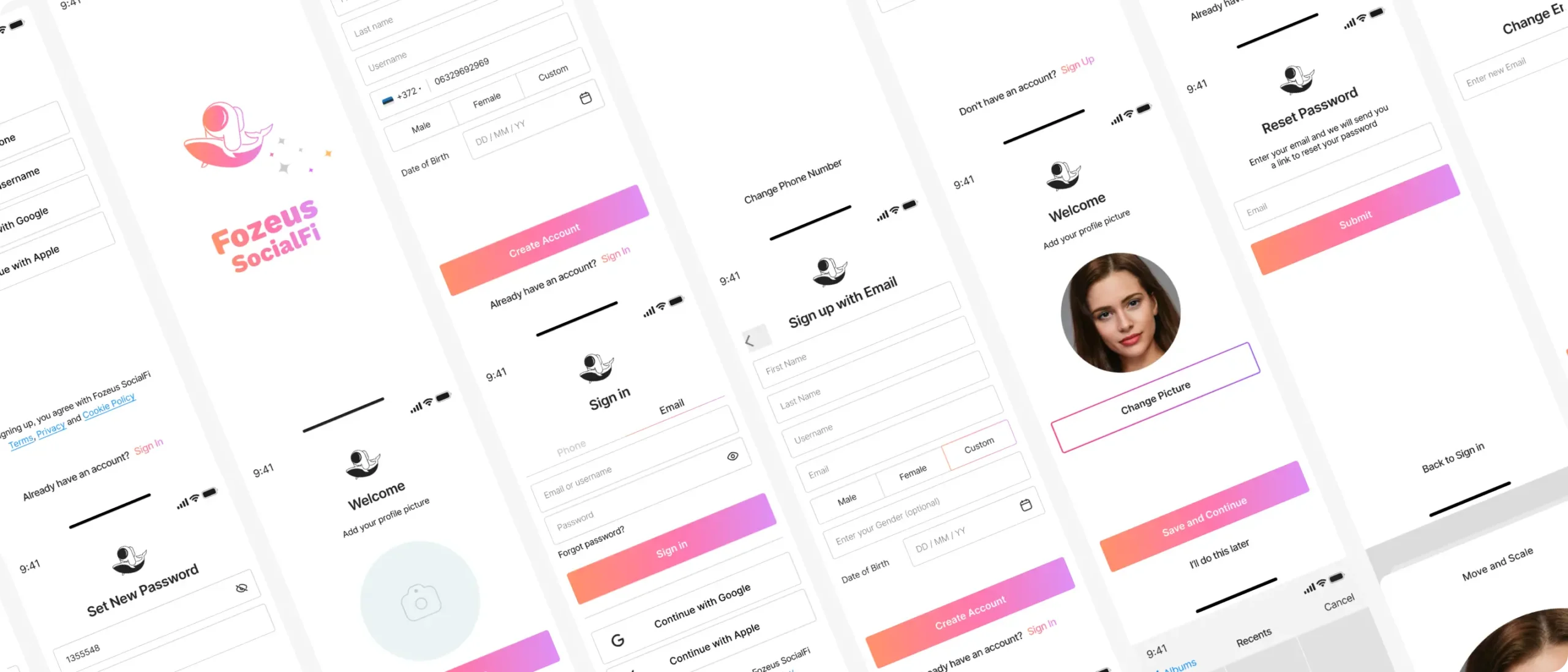
The UI kit pins down the parts every screen is built from. The palette pairs white, greys and near-black with the coral-to-lilac gradient, a messenger blue and signal colours in salmon, red-orange, pink, green and amber. Inputs are drawn in each state, including filled, active, phone with country code and error with an inline message, next to a three-way gender selector, gradient, outline and disabled buttons, toggles and message status ticks. Icons split into filled glyphs, outline glyphs and a set for call controls.
Onboarding is assembled from those parts: sign in by phone, email, Google or Apple, sign up with email, a welcome step for the profile picture, password reset and changing phone or email. A full map of the mobile screens keeps every flow checkable end to end.
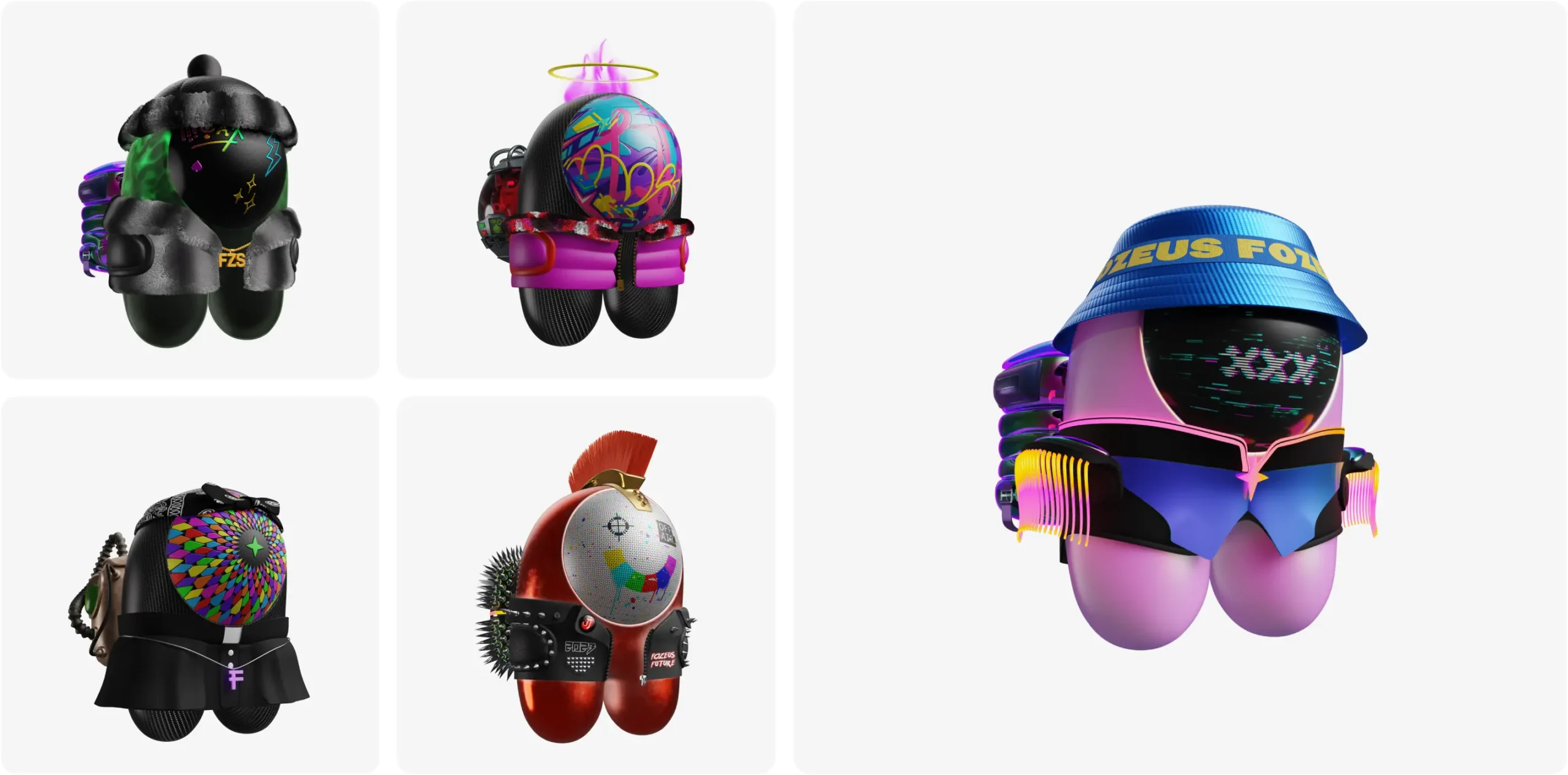
Generated NFT 3D citizens on one character base
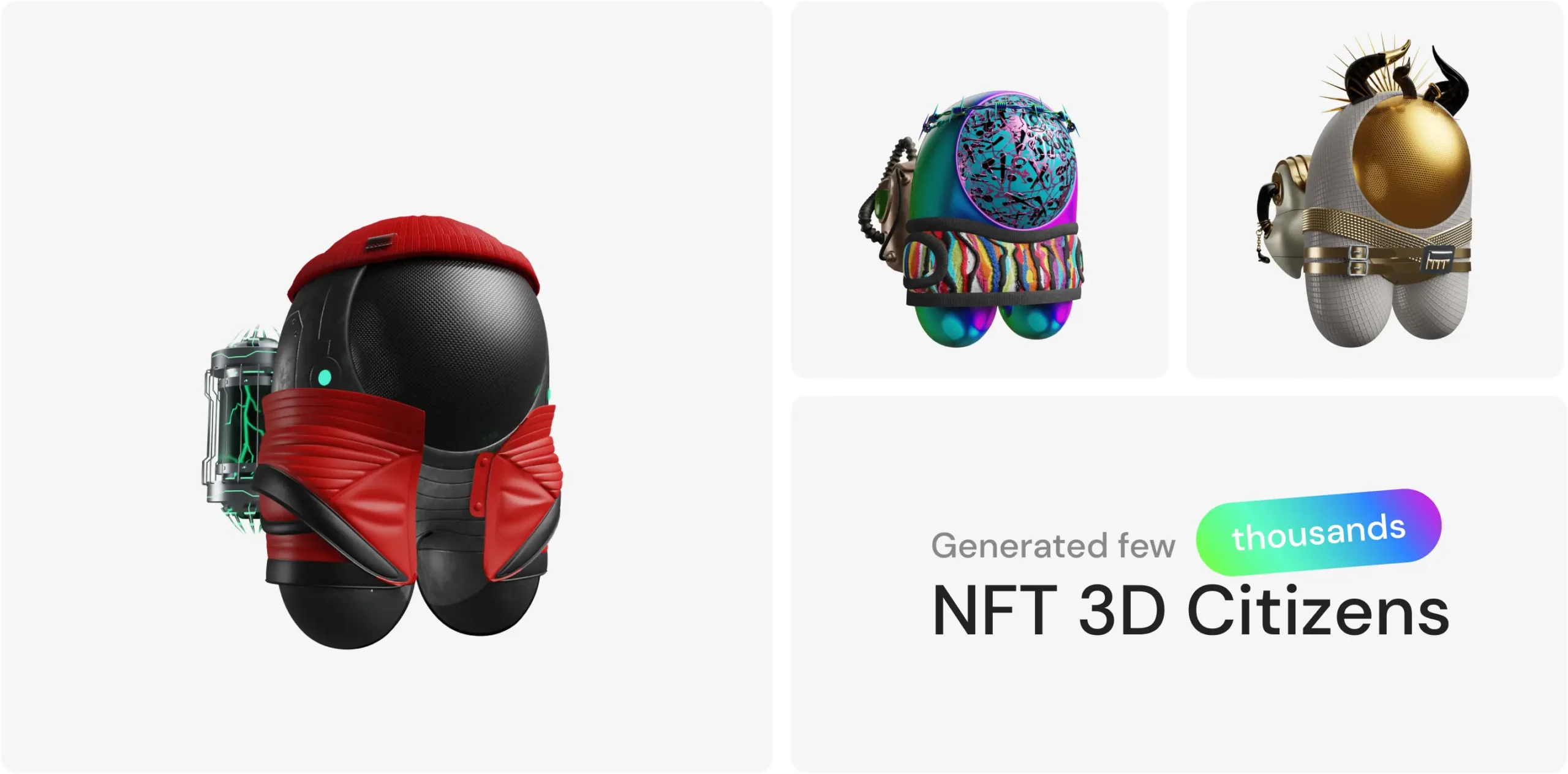
The 3D work turns the logo's astronaut into a cast of NFT citizens. Every character shares one base: a rounded capsule body, a glossy visor where a face would be, two short legs and a pack on the back. Wardrobe and finish carry the variation. Of the eight characters in the case, one wears a puffer jacket with an FZS chain, another a halo over a graffiti visor; others get a red mohawk with studs, a bucket hat lettered Fozeus, or a white quilted suit with a gold visor and horns.
Keeping the base fixed is what made generation practical, since traits combine on the same body. The series of NFT 3D Citizens was generated in the thousands.
Project facts
- Client
- Fozeus SocialFi, a crypto social network from Estonia where members mine the FZS token
- Industry
- SocialFi, crypto social network
- Platform
- Web app (desktop), mobile app
- Services
- Brand refresh, UX/UI design for web and mobile, design system and UI kit, 3D character design
- Deliverables
- Desktop web app organised into fourteen named flows; mobile app with messenger and video calls; UI kit; onboarding; a series of 3D NFT characters generated in the thousands
- More work in
- 3D Graphics & Motion Design, Brand Identity, Mobile Applications, UX/UI Web Design
Questions about this project
What is Fozeus?
Fozeus SocialFi is a social network where members also mine the FZS token. It combines a feed with stories and communities, a messenger with video calls, a mining dashboard and a wallet.
What did thelegacy design for Fozeus?
The desktop web app, the mobile app with its messenger and calls, a UI kit and onboarding, and a series of 3D NFT characters built on the astronaut from the logo.
How were the Fozeus 3D NFT characters made?
Every character shares one base: a rounded capsule body, a glossy visor, two short legs and a pack on the back, while wardrobe and finish carry the variation. Keeping the base fixed let traits combine on the same body, and the series was generated in the thousands.