How to choose a web3 design agency: criteria, questions and 8 fintech and crypto studios compared

To choose a web3 design agency, judge it by the products it has already shipped, not by its homepage. Look for complete fintech or crypto flows in its portfolio, ask who will do the work and how decisions are made, and compare a short list side by side. Below are the criteria, the questions for a first call and eight studios compared, plus thelegacy, checked on 23 October 2026.
We are a design studio ourselves, so read this guide as a checklist you can run on anyone, us included. Our own work in this field is on the UX/UI web design page.
What should you check first when choosing a web3 design agency?
Check whether the studio has designed a product like yours from the first screen to the last state. A beautiful landing page proves taste; a finished wallet, exchange or dashboard proves the studio understands seed phrases, fees, network choice and failed transactions.
- Relevant shipped work. Case studies with real product screens in your category: wallet, exchange, DeFi dashboard, banking app, token launch site.
- Depth, not just hero shots. Onboarding, empty states, errors, confirmations and receipts, not only the most attractive screen.
- Who does the work. The people you meet on the call should be the people designing, or you should know who will be.
- What they cover. Product UI only, or also brand, website and investor deck. Several studios split these between teams; some keep them in one visual system.
- How they hand over. A Figma file with components and states your developers can build from, or a set of pictures.
- How they talk about risk. In a money product the designer should raise fees, irreversible actions and regulatory screens before you do.
How do you read a studio’s portfolio?
Read it the way a user would use the product: follow one task from start to finish. If you cannot follow how a user creates a wallet, sends funds and sees the result, the case shows a mood board, not a product.
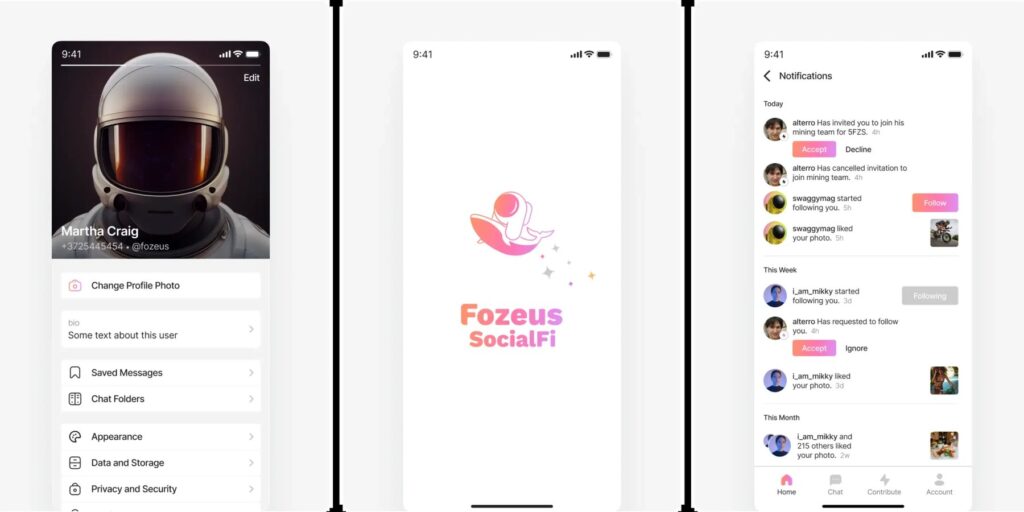
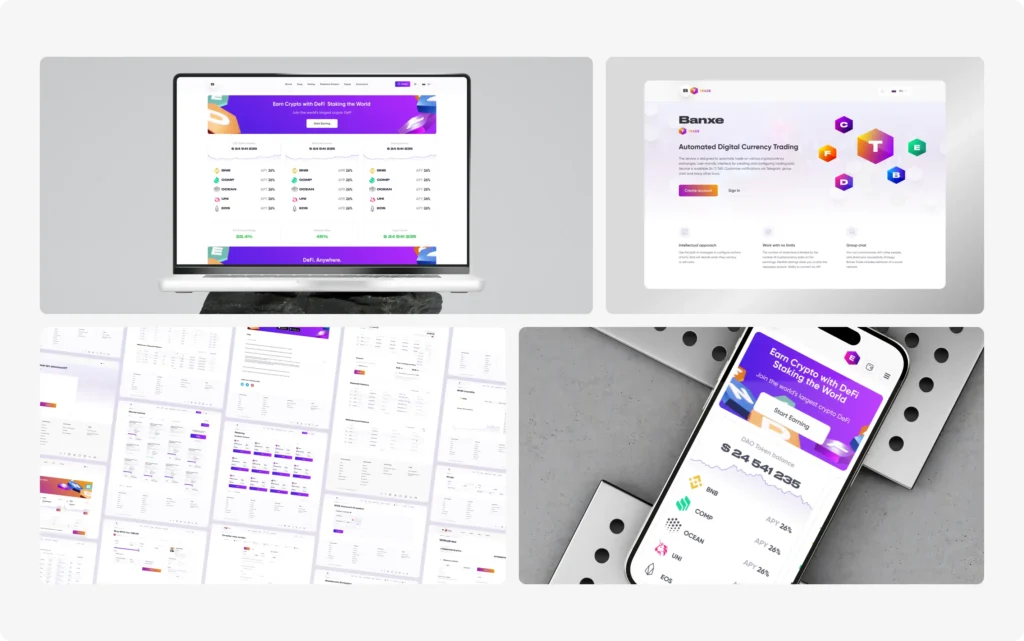
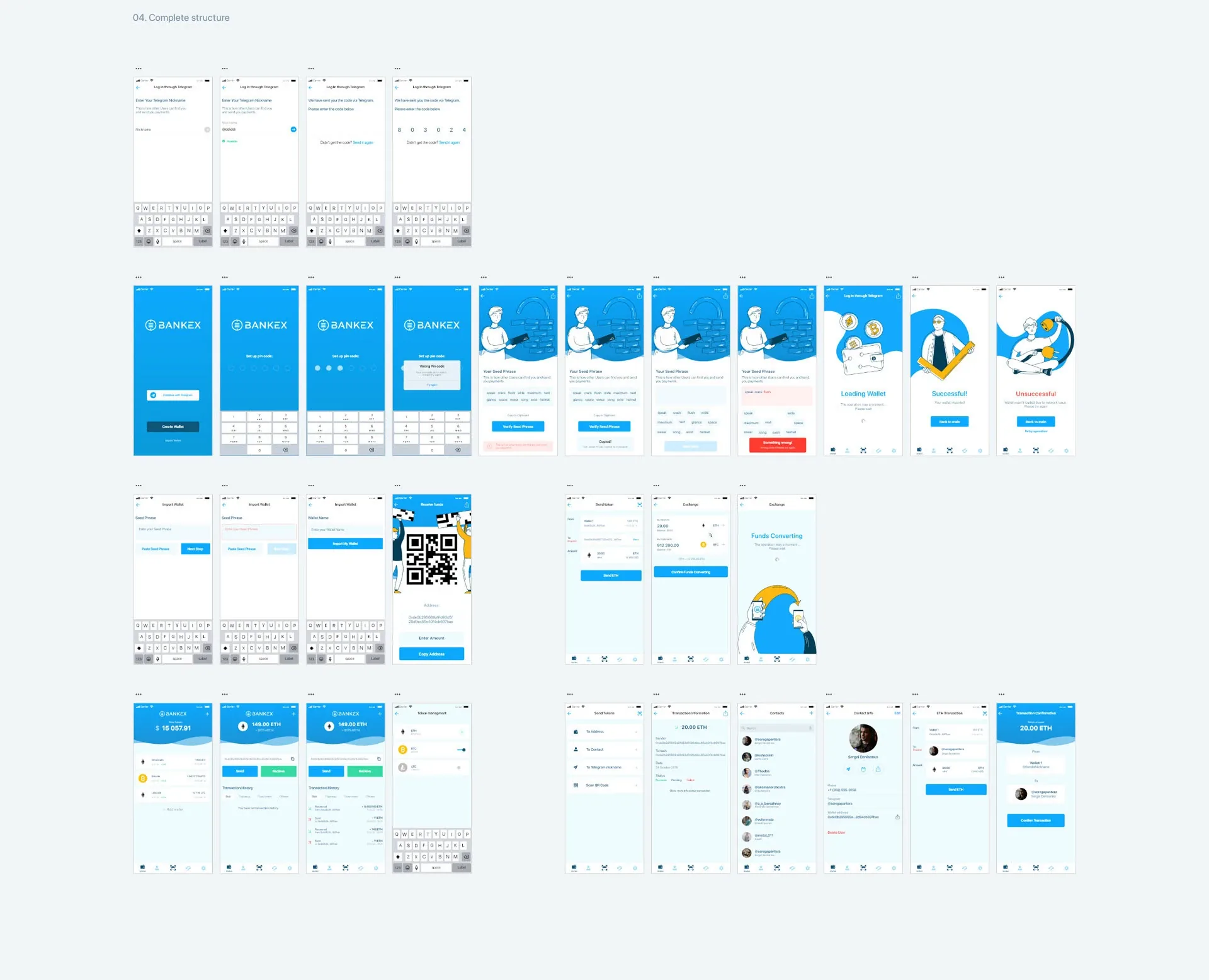
Good fintech and crypto cases show the in-between states. In the BANKEX Crypto Wallet case the full screen set lays the app out flow by flow, from splash and PIN set-up to QR codes, transfers and contacts, so a reader can check every step. In Banxe the P2P deal screen is shown with its four-step stepper, the countdown before an offer cancels itself and the counterparty panel with rating and verification level.
Three more things to look for while you read:
- Is the client named and is it clear what the product does? Anonymous concepts are fine as practice, but they are not shipped work.
- Does the case say what the studio did and what it did not do (design only, or front-end too)?
- Do the screens agree with each other: the same buttons, type and colours on the site, the app and the deck?
Which questions should you ask a web3 design agency on the first call?
Ask questions that make the studio describe how it works, not how good it is. The answers show whether they have done this before.
- Which of your cases is closest to our product, and what was hardest in it?
- Who exactly will design our screens, and who will we talk to week to week?
- How do you handle wallet connection, network choice, gas and failed transactions in the interface?
- What do you need from us before you start: product specs, compliance requirements, an existing brand?
- What will our developers receive at the end, and will you answer their questions during the build?
- Can you also do the website, brand or investor deck, and will they look like the product?
Ask about price only after scope is clear. A quote for “a web3 app” without screens and flows listed is a guess on both sides.
Which studios design for fintech and crypto, and what does each focus on?
Several studios design for fintech and crypto, and they differ more in focus than in quality: some are web3-native, some serve banks, some lead with AI and SaaS. The table below uses only what each studio says on its own homepage, checked on 23 October 2026; sites change, so check again before you shortlist.
| Studio | How it describes itself | Fintech and crypto work named on its homepage | A fit when you need |
|---|---|---|---|
| Avark | A specialist web3 design and branding agency | Linea (a token launch reward hub), finestt (DeFi wallet), Metacade, Bitstarter | A web3-native brand, site and product |
| Clay | A global branding and UX design agency | Grayscale (web redesign), Sky (DeFi branding), Marqeta, STC Bank | A rebrand and website for an established company |
| UXDA | Financial UX design for large financial institutions | Emirates NBD, Garanti BBVA Securities, GCash investments | Digital banking for a bank or a large financial group |
| Merge | A UX design agency for B2B, SaaS and fintech | Block Earner; lists crypto wallets, exchanges and Telegram mini apps | Product design with front-end development |
| Arounda | A design and development partner uniting brand, website and UI/UX | MYSO Finance, Enzyme (DeFi) | Design and build from one team |
| Lazarev. | Redesigns complex AI, data and B2B platforms | Lists fintech and Web3 as industries; no fintech or crypto case on the homepage | Complex AI and B2B platforms |
| 925Studios | A design partner for AI and B2B SaaS products | Mentions Web3; no fintech or crypto case on the homepage | AI and SaaS products, sites and founder videos |
| Halo Lab | A design and tech agency | Pluto (spend management); its fintech page is marked “Coming Soon” | Design with development, outside crypto |
| thelegacy (us) | A design studio since 2012 for crypto, fintech and tech companies | Banxe, Solid, Souq, BANKEX, ARUS, dEquity | A product, brand and investor deck in one visual system |
Use the table to build a shortlist of three, then open the case studies themselves. The “fit” column is our reading of each studio’s own focus, not a ranking.
What red flags should make you walk away?
Walk away when the studio cannot show or explain the parts of a money product that are hard. These are the signs we would treat as a stop:
- The portfolio has only hero images and Dribbble shots, with no flows or states.
- Nobody can say who will design your screens.
- Promises of rankings, listings, fundraising results or “viral” growth from design alone.
- No questions about your users, your regulator or your chain before a quote.
- Handover means exported pictures rather than a working file with components.
Should you hire a specialist web3 studio, a general agency or a freelancer?
Choose by the size of the job. A specialist studio fits when the product, the brand and the fundraising materials need to look like one company; a large agency fits enterprise rebrands with many stakeholders; a strong freelancer fits a single, well-defined screen set when you already have a design system.
What matters more than the label is continuity. In fintech the same person should carry decisions from the onboarding screen to the receipt, because trust breaks at the seams between screens designed by different hands. We wrote about those seams in Fintech UX design: 9 patterns that make people trust a money app.
How do these criteria look on real cases?
Here is how we check our own cases against the list above, so you can do the same with any studio. Each one shows a full flow, says what the client does and keeps one visual system across its parts.
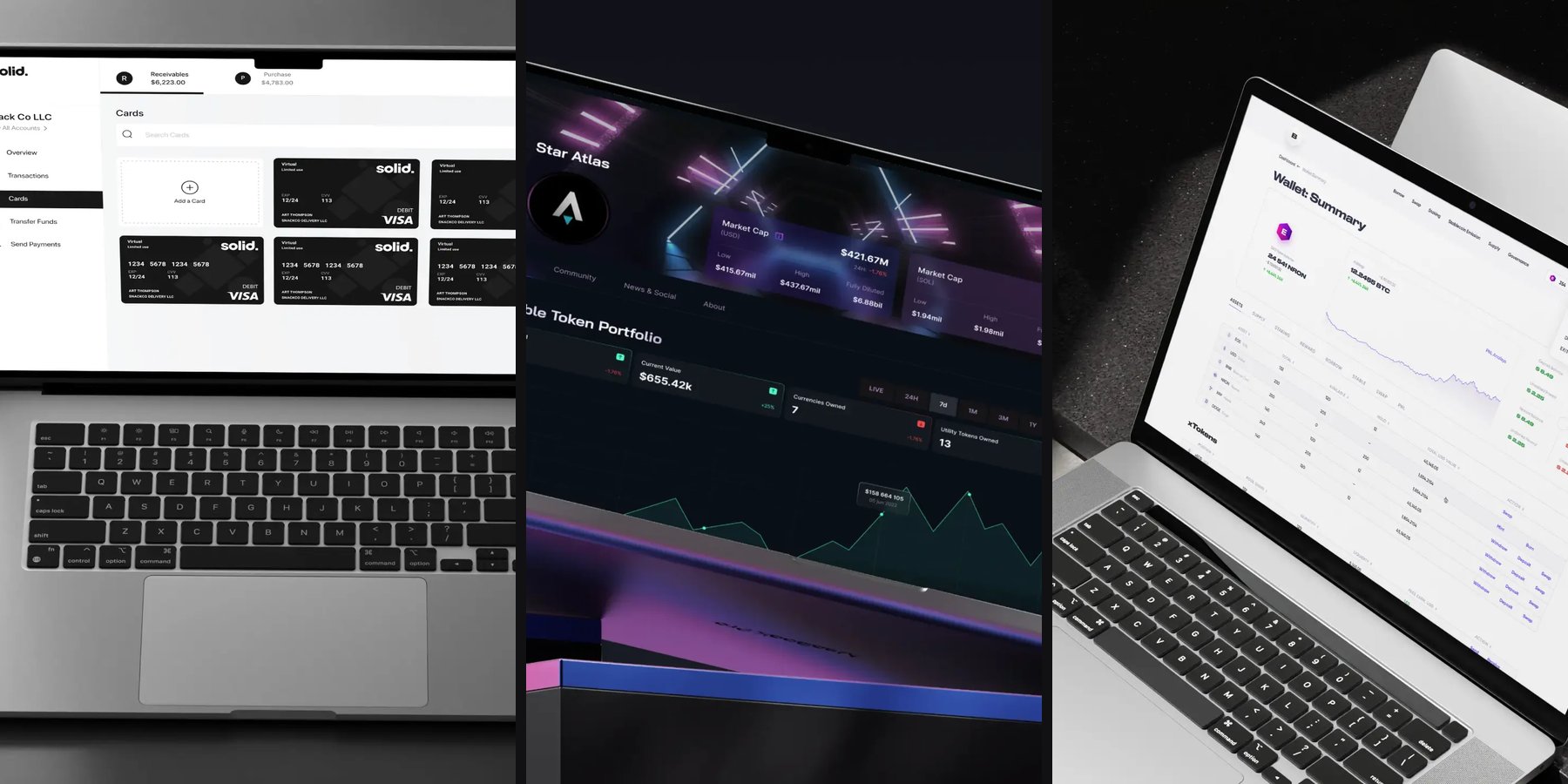
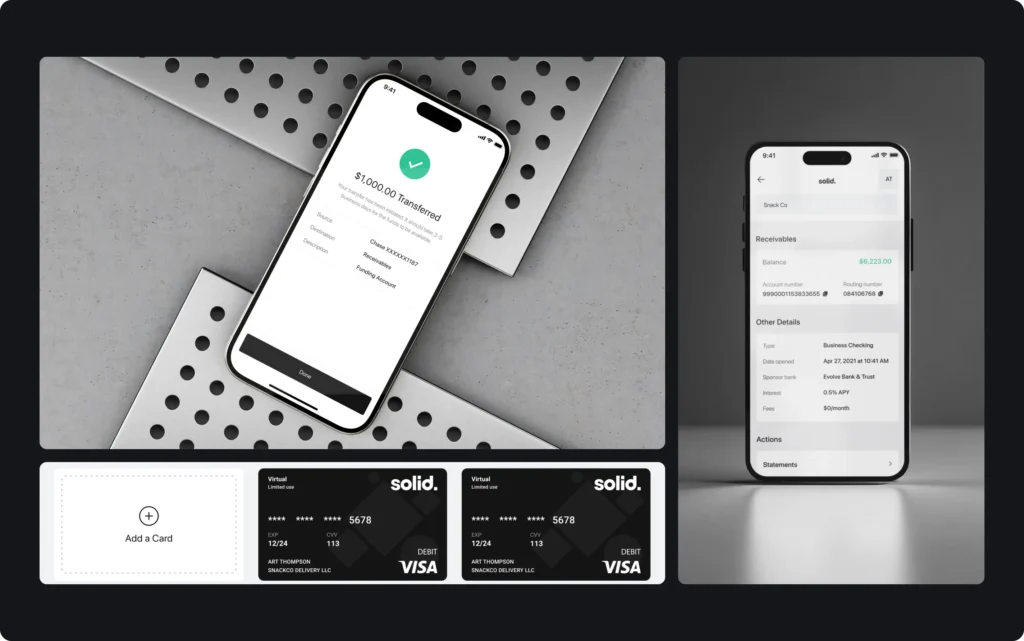
In Solid, a business banking platform, the money movement flow ends on a receipt that repeats the amount, source and destination, and the account screen shows the sponsor bank, the account and routing numbers in one place. The point is that a business user never has to guess where the money went.
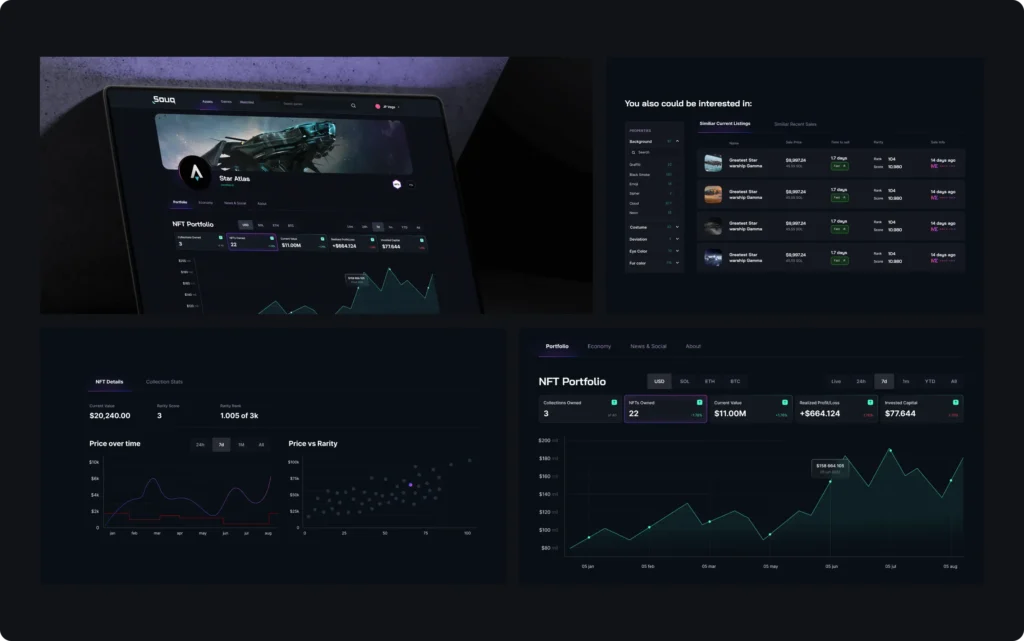
In Souq, a portfolio manager for game NFTs and tokens with staking vaults, the NFT portfolio dashboard puts collections owned, NFTs owned, current value, realised profit and invested capital in one row above the chart. The decision was to show the answer to “how am I doing” before any detail.
And in Banxe the exchange, the wallet app, the brand guidelines and the pitch deck share one hexagon-based system, so an investor who opens the deck sees the same product a user sees in the app.
What should you do next?
Write down your product type, the flows you need and what your developers expect to receive, pick three studios from the table and send all three the same brief. Compare the questions they ask, not only the answers. If one of the three is us, start from the UX/UI web design page or the contact page.
Key takeaways
- Judge a web3 design agency by its shipped products: complete wallet, exchange or dashboard flows with their in-between states count for more than beautiful hero images.
- On the first call ask who exactly will design, how the studio shows gas, networks and failed transactions, and what your developers will receive.
- Shortlist three studios, send all three the same brief and compare the questions they ask.
Frequently asked questions
How do I choose a web3 design agency?
Look at shipped products in your category rather than the homepage: case studies should show complete flows with onboarding, errors, confirmations and receipts. Then ask on a call who will design and how the studio handles fees and networks, and compare three studios on the same brief.
How is a web3 studio different from a regular design agency?
A web3 studio already knows how to show wallet connection, the seed phrase, network choice, gas, transaction signing and a failed transaction. A regular agency can make a good-looking interface, but you will have to explain those states from scratch.
Should I hire a freelancer instead of a studio for a crypto product?
A freelancer fits a single, well-defined set of screens when a design system already exists. When the product, the brand, the website and the investor deck need to share one system, a studio that carries all of them together is easier to work with.
What should my development team get from a design studio?
A working Figma file with components, their states and every screen of each flow, including errors and empty states, plus the chance to ask the designers questions during the build. A set of exported pictures is not enough for a money product.
Which studios design fintech and crypto products?
Studios that mention fintech or crypto on their own sites include Avark, Clay, UXDA, Merge, Arounda, Lazarev., 925Studios and Halo Lab, as well as thelegacy. They differ in focus: web3 brands, banks, SaaS and AI, or a product together with its brand and pitch deck.