How to Make a Crypto Pitch Deck: the Slides a Web3 Deck Needs Beyond a Normal One

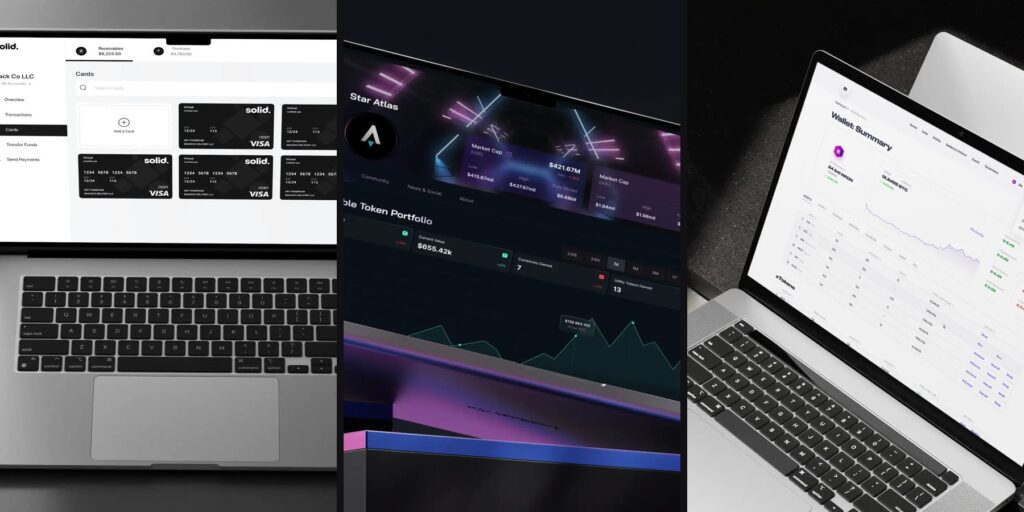
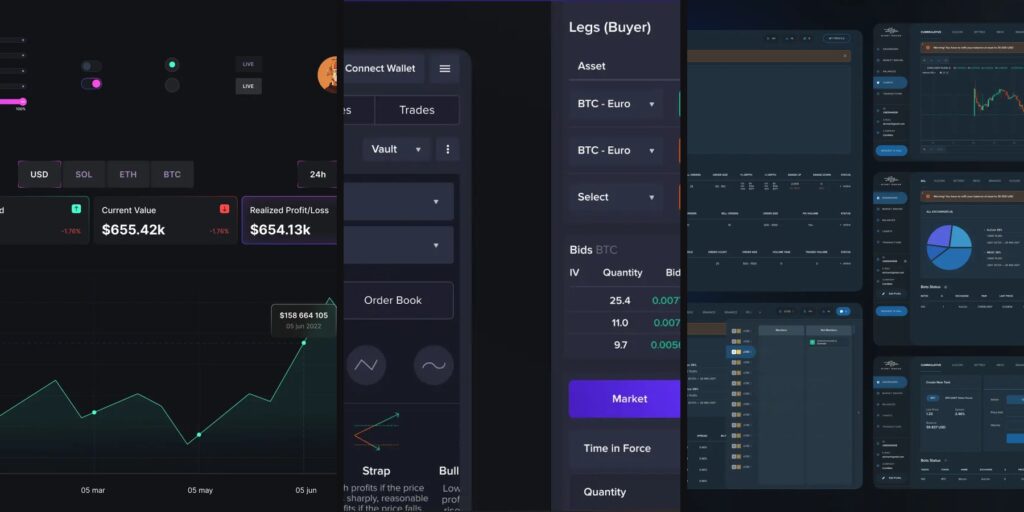
To make a crypto pitch deck, start with the usual investor story (problem, product, market, team, raise) and add the slides a token brings with it: what the token does, how the protocol earns, tokenomics, the unlock schedule and a legal disclaimer. thelegacy designed the Optix, Souq and dEquity decks this guide draws on.
The decks are part of our pitch deck design service, and each one is published slide by slide on its case page.
What makes a crypto pitch deck different from a normal one?
A token is a second product. The investor reads the company and the token economy at the same time, so the deck needs slides that a SaaS or fintech deck never has. The table lists them in the order we would use, with the slide from our own decks that does the job.
| Slide | Question it answers | From our decks |
|---|---|---|
| Problem and opportunity | Why this, why now | Optix: four market problems in two columns, then three framed market cards |
| Product on real screens | Does it exist | dEquity: product slides give two thirds of the frame to the platform; Souq: Today and Tomorrow |
| Revenue model | How the protocol earns | Optix: a two-column table of source and description |
| Token utility | Why anyone holds the token | Optix: the token slide, then staking, boosting and voting as three cards |
| Economy loop | What keeps demand going | Optix: closed-loop economy; Souq: tokenomics drawn as a flow from players to platform revenue |
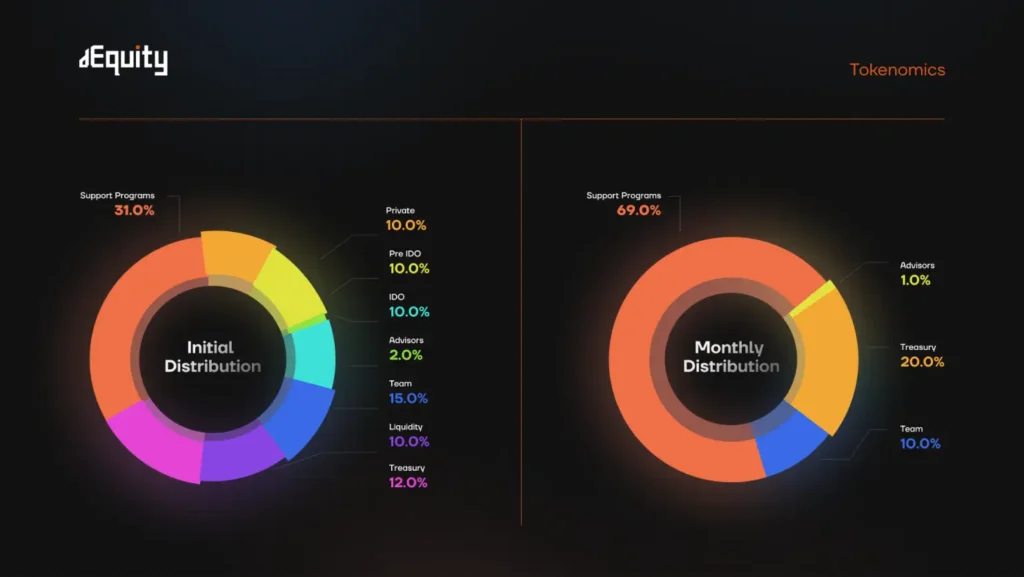
| Tokenomics | Who gets what | dEquity: initial and monthly distribution as two donuts |
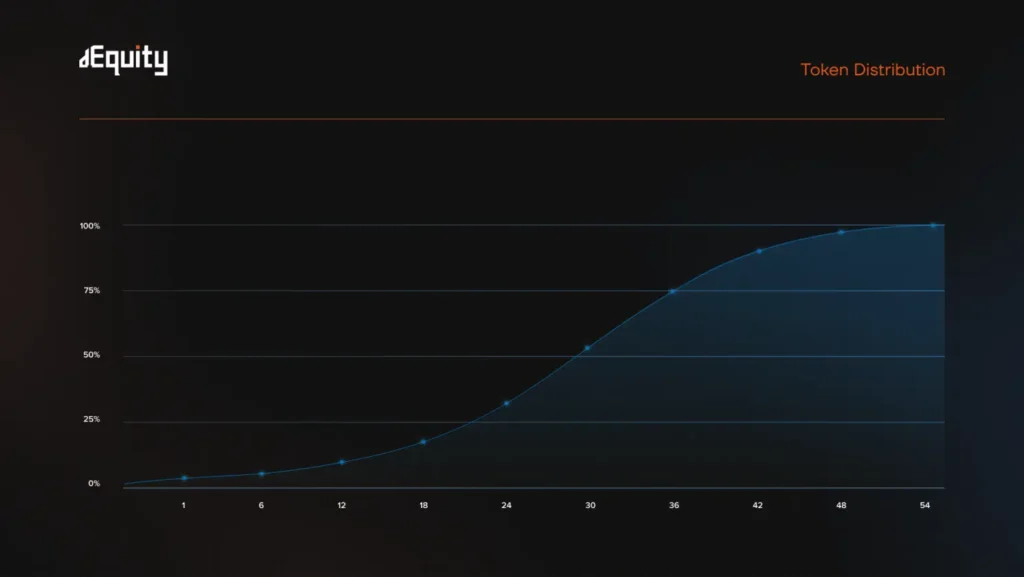
| Unlock schedule | When tokens reach the market | dEquity: Token Distribution as one curve over months |
| Traction and roadmap | What has shipped and what is next | Souq: product versions on a timeline; Optix: roadmap split by product line |
| Team | Who builds it | Souq: Founders |
| Legal disclaimer | What the deck is not | Optix: the closing Legal Disclaimers slide |
| The ask | What is being raised | dEquity: the closing Opportunity slide with one line and a contact |
Where does the product go in a crypto deck?
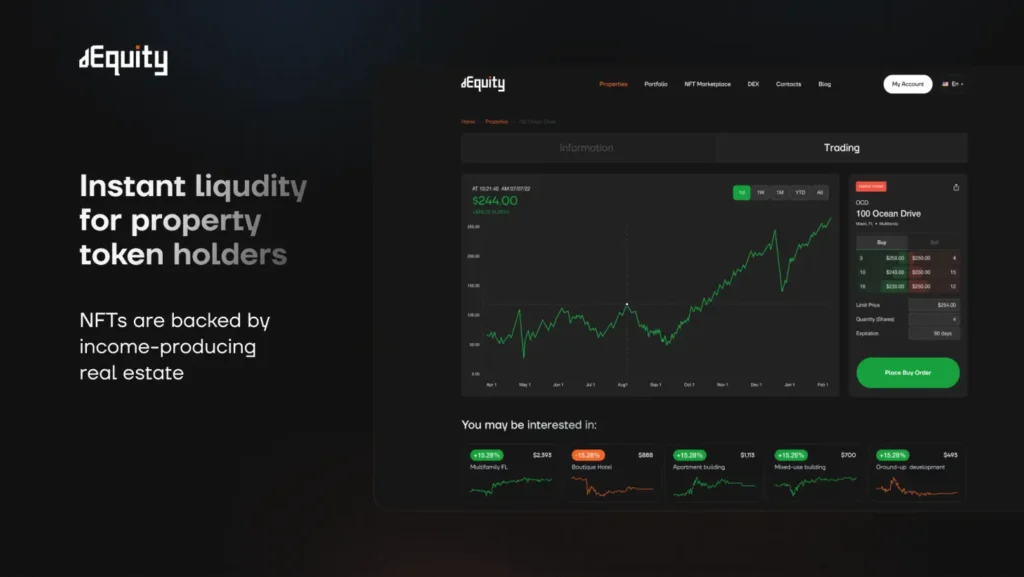
Early, and as real screens rather than a feature list. A working interface answers the first doubt about any token project, whether there is a product behind the token at all.
In the dEquity deck three product slides drop the usual rules and hand two thirds of the frame to the platform: the offers table, the trading view and a property page, each beside one short claim.
How do you explain what the token does?
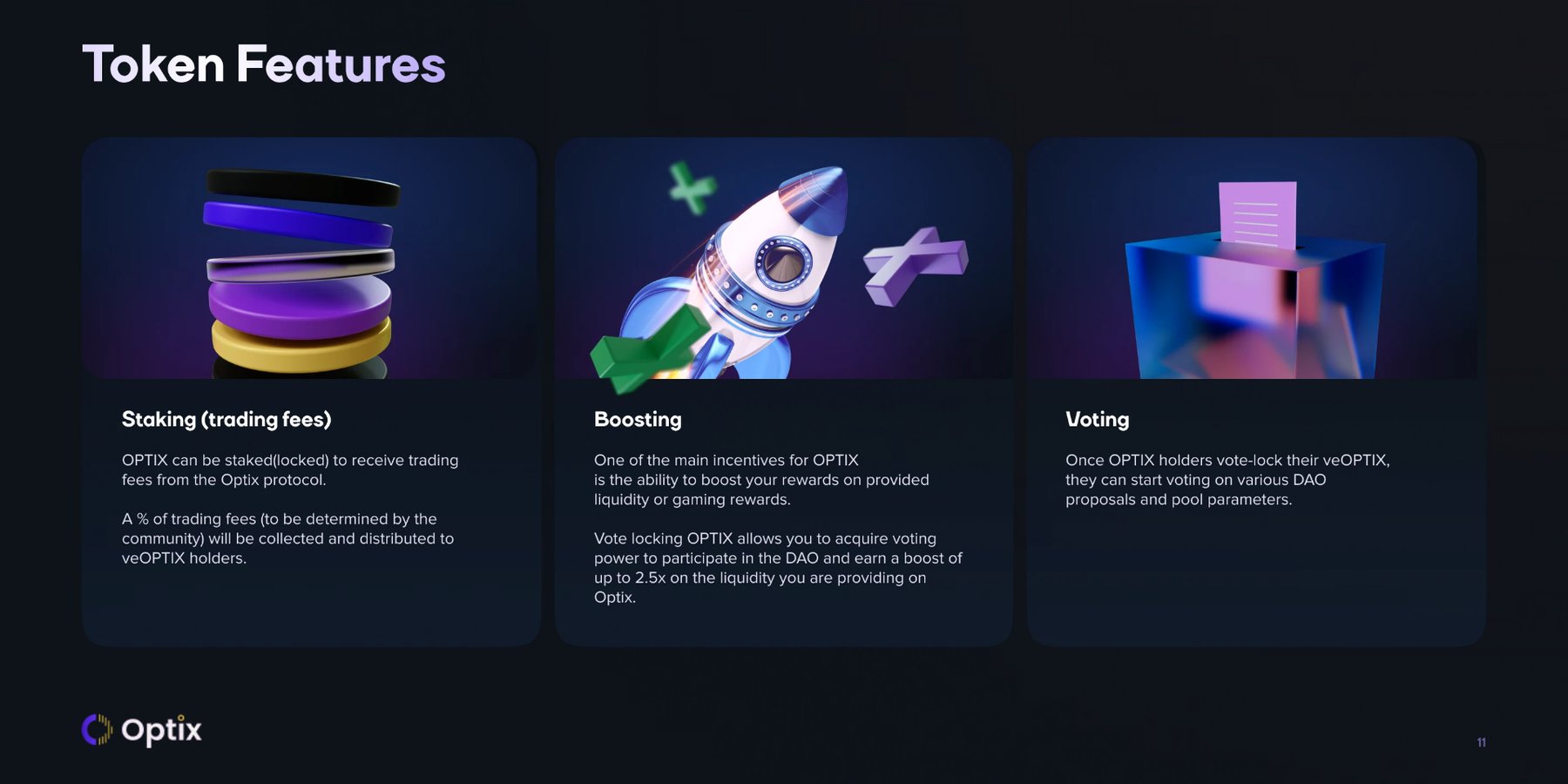
Give the formal definition one narrow column and spend the space on the uses. In the Optix deck the token slide puts a dark 3D coin with the Optix mark at the centre and keeps the long definition of OPTIX beside it. The next slide turns the protocol’s 3D set into card headers: stacked discs for staking, a rocket for boosting, a glass ballot box for voting, each above a short explanation.

Then show how the protocol earns. Optix sets its revenue model as a plain two-column table, source and description, with one line on governance under it. A business-model slide is where a crypto deck most often falls back on promises; a table of fee sources keeps it concrete.
How do you show tokenomics on a slide?
As a chart labelled in its own colours, with the unlock schedule on a separate slide. Allocation and timing are two different questions, and one chart cannot answer both.
The dEquity Tokenomics slide places two donuts side by side, initial and monthly distribution, and sets each share in the colour of its slice, so neither chart needs a legend. Token Distribution follows as a single blue curve over horizontal guides.
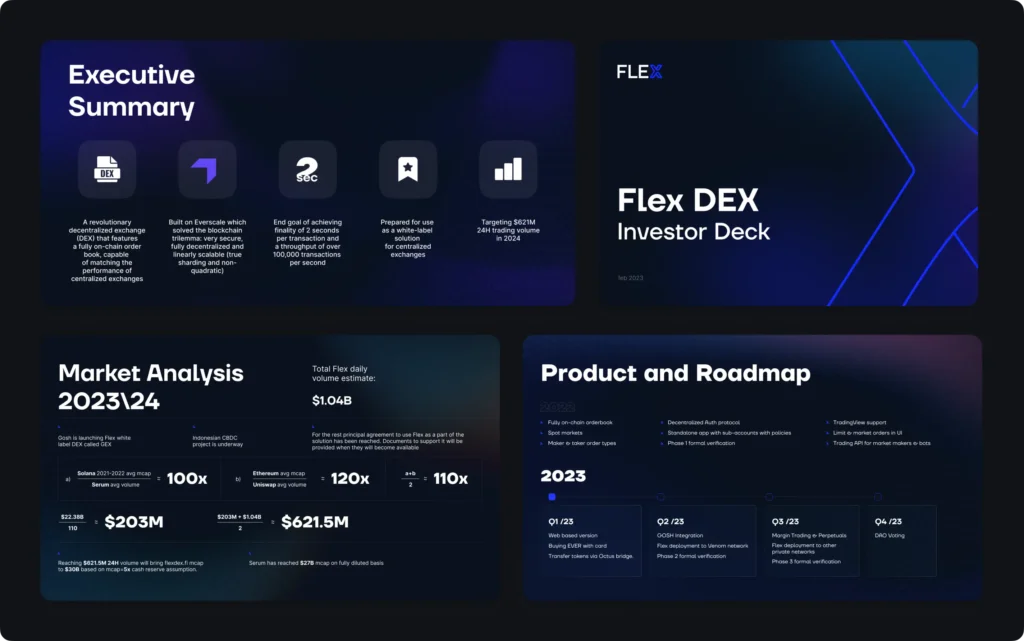
The Flex investor deck shows the other half of the job, the market numbers. Its Market Analysis slide writes each ratio as a fraction with the result in large type, so an investor can trace how the volume estimate is built.
What changes in a crypto fund deck?
The token slides disappear and the terms take their place. The Skynet Fund deck, a proposal for an Aleph Zero ecosystem fund, walks from the manager and its earlier fund to three directors, then sets the proposed fund setup and the management company as two-column monospace tables, label on the left and value on the right. Fund type, voting rights, fees and hurdle rate read like a term sheet, which is what a fund investor expects.
How to make a crypto pitch deck, step by step
- Write the story as headlines only, one per slide, from problem to ask.
- Add the token block: utility, revenue model, economy loop, tokenomics, unlock schedule.
- Collect real product screens; a slide without one needs a reason.
- Fix one frame for every slide: logo, section label, headline style, page number.
- Draw every figure as a chart or a table with the working shown.
- End with the ask and a legal disclaimer written by your lawyers.
For finished examples, see 11 crypto and fintech pitch deck examples; for the brand work around a launch, token launch branding; and if you are weighing a template against a designer, can ChatGPT create a pitch deck. The pitch deck design service shows all eleven of our decks.
Key takeaways
- A token is a second product: the deck adds utility, revenue model, economy loop, tokenomics, the unlock schedule and a legal disclaimer to the usual investor story.
- Allocation and timing are two questions: dEquity shows tokenomics as two donuts labelled in their own colours and the unlock schedule as one curve on its own slide.
- A fund deck swaps the token slides for terms, set as a two-column table that reads like a term sheet, as in the Skynet Fund deck.
Frequently asked questions
How is a crypto or web3 pitch deck structured, and what slides does it need beyond a normal deck?
It follows the usual order of problem, product, market, team and raise, and adds a token block: what the token does, how the protocol earns, the economy loop, tokenomics and the unlock schedule. It usually closes with a legal disclaimer as well as the ask.
How many slides should a crypto pitch deck have?
As many as the token needs to be explained. Our investor decks for dEquity, Optix and Souq run to 11, 14 and 22 slides; the longer ones carry more product and economy slides, not longer text.
Is a crypto pitch deck the same as a whitepaper?
No. The deck is the short argument for investors; the whitepaper or litepaper is the full technical and economic description. They work best in one visual system, with token distribution and vesting drawn as charts in both.
Does every crypto pitch deck need a tokenomics slide?
Only if there is a token. A fund deck or a services deck for a crypto company does without one and shows terms, services or proof instead.
Who writes the legal disclaimer in a crypto deck?
Your lawyers. The designer gives it a readable slide at the end of the deck; the wording depends on the token, the jurisdiction and the investors, so it should not be copied from another project.