Web3 Design Trends 2026: Is Web3 Still Relevant, and What Its Products Look Like Now

Web3 design trends in 2026 start from one answer: web3 is still relevant, but as plumbing rather than a slogan. Stablecoins moved $46 trillion in a year while DeFi deposits stand near $85 billion. The products that stayed look like finance apps: a trading screen, a portfolio, a ledger. thelegacy designed five of them: Flex, Souq, dEquity, Fozeus and KWPC.
All five came through our UX/UI and web design work, and every screen below is published on its case page. The numbers come from two public sources, with the date we checked them.
Is web3 still relevant in 2026, or just a buzzword?
Relevant, and measurable. The question is answered by usage, not by headlines, and the two sources below disagree in a useful way.
- a16z State of Crypto 2025 (checked 2 November 2026): an estimated 40 to 70 million active crypto users, about 181 million monthly active onchain addresses, $46 trillion of stablecoin transaction volume in twelve months ($9 trillion after filtering out bots) and a stablecoin supply above $300 billion.
- DefiLlama (checked 2 November 2026): total value locked in DeFi about $85 billion, against about $147 billion a year earlier and a peak near $178 billion in November 2021; stablecoins in circulation about $298 billion.
Read together: money moves over web3 rails every day while speculative deposits shrink. The audience that stays is using a product, not waiting for a narrative, and it judges the screen the way it judges a banking app. That is the whole trend. “Real or fake” has a plain answer too: the contracts and volumes are public onchain; what turned out to be fake was the idea that a token alone is a product.
What is web3 in simple terms, and what is it used for?
In simple terms, web3 is software where the user’s wallet holds the assets and signs the actions, and a blockchain records them, instead of a company’s account doing both. What it is used for is easier to show than to define, so here are our five cases.
| Use | What the user does | Case |
|---|---|---|
| Trading tokens | Places orders in a fully on-chain limit order book | Flex, a DEX on Everscale |
| Earning on game assets | Tracks NFTs across several wallets, deposits stablecoins into time-locked vaults, receives rewards in game tokens | Souq |
| Owning a slice of a building | Buys fractions of a property, receives rent distributions, sells tokens on the platform’s own DEX | dEquity |
| A social network with a token | Posts, messages, calls and mines FZS by checking in | Fozeus |
| Funding new projects | Holds KWT and votes for projects during a live show; a launch fund and a launch pool sit next to it | KWPC |
Is web3 just crypto? No. The token is one layer. Most screens in these five products are a feed, a chat, a table of properties or a price chart, the same objects any app has; the wallet and the onchain record sit underneath them.
What are the web3 design trends in 2026, and what do web3 products look like?
Like financial software with a brand. Five things repeat across the screens we designed, and each is a decision a founder can copy.
1. The product before the pitch
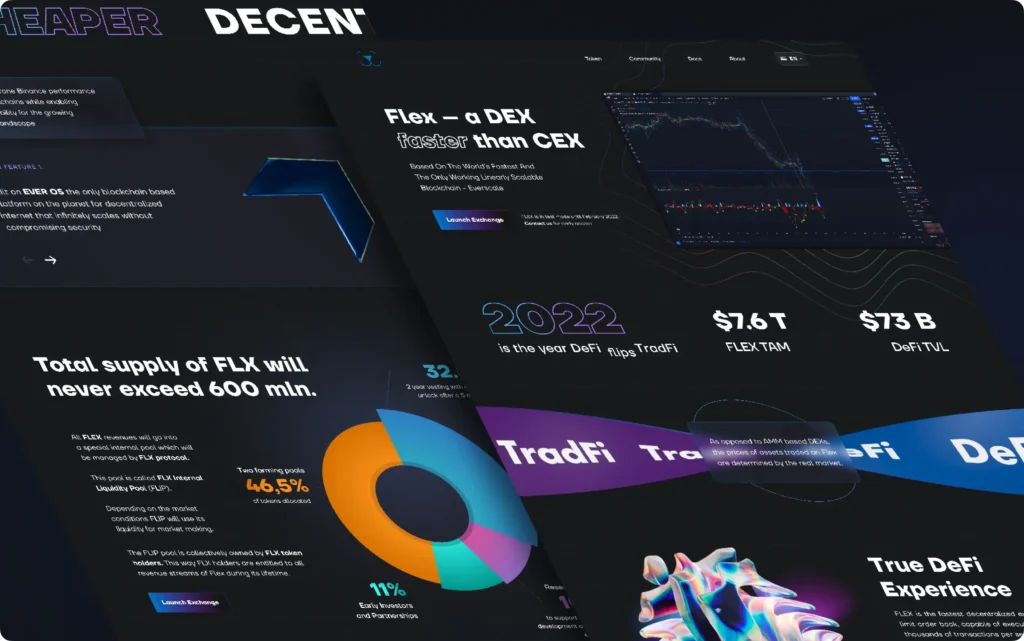
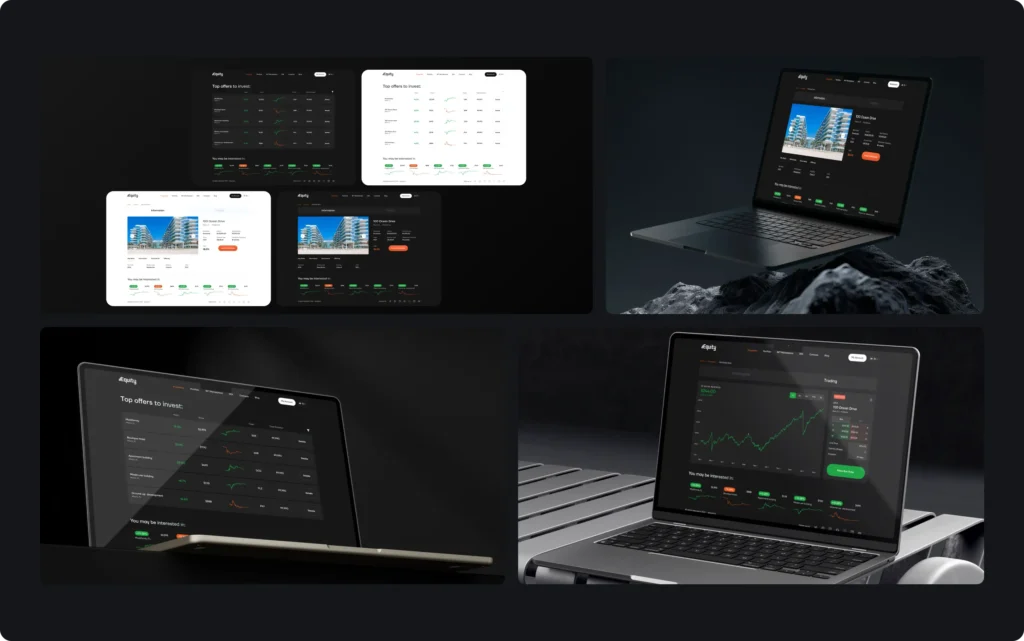
The first screen shows the working interface, not a promise about it. On the Flex landing page a screenshot of the trading terminal, with candles, an order book and a trade history panel, sits beside the headline on desktop and drops under it on the phone. The dEquity investor deck does the same on paper: product slides place real platform screens, the offers table and the trading view, beside one short claim each.
2. Fees and risks itemised before the button
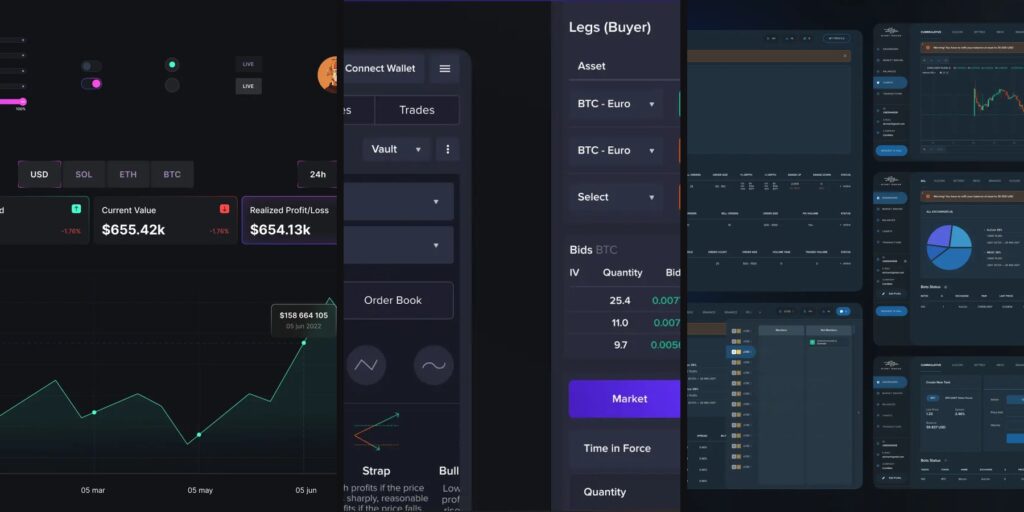
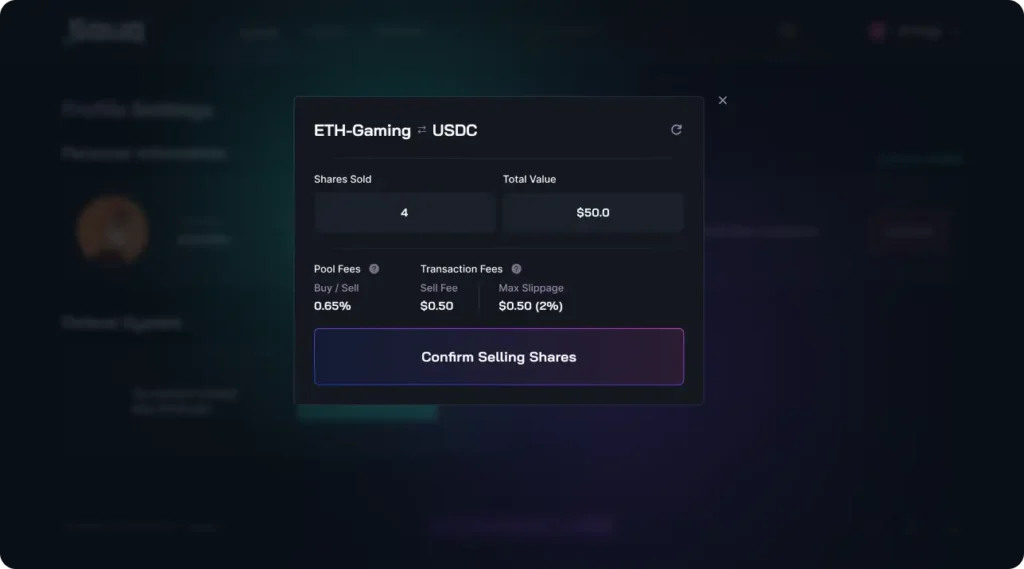
Every confirmation lists what the action costs before it offers the button. The Souq vault modals follow one order: the vault or pair name on top, amounts in dark tiles, then deposit, redemption, gas, DEX fee, slippage and price impact, and only then a single confirm button. On the KWPC wallet top-up form, the warning that money sent to a wrong address will not be returned sits right next to the fields. We covered the wallet connect and signing side of this in web3 UX design.
3. Light themes where the page sells, dark where the data is dense
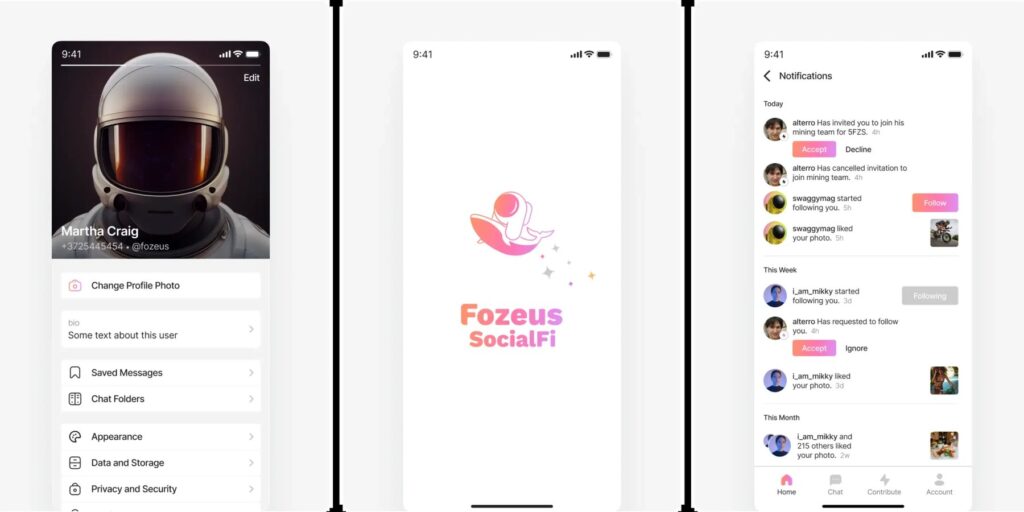
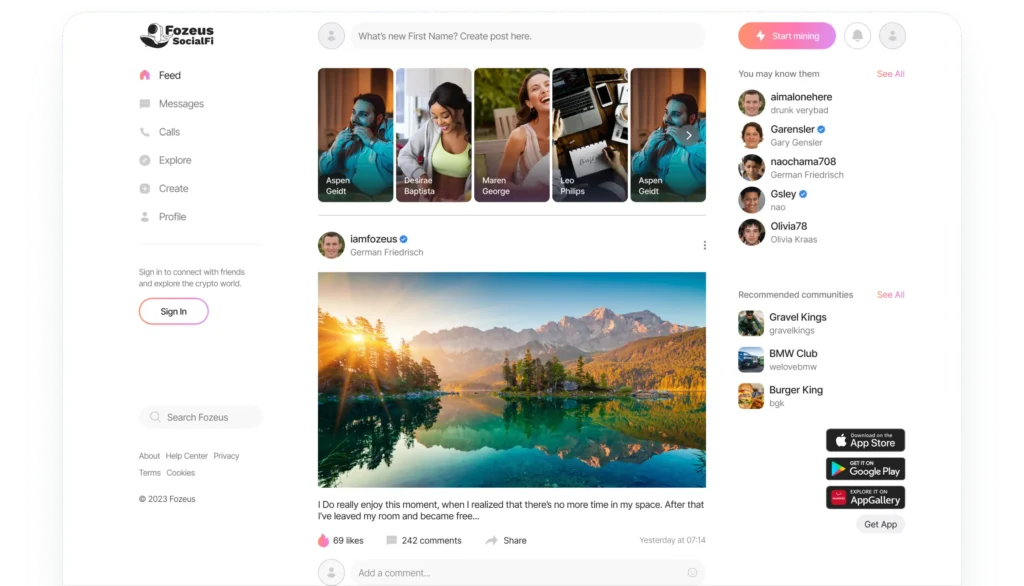
Dark neon stopped being the uniform. The dEquity website is white and pale sky blue with orange kept for actions, and its trading interface is a dark twin built from the same components, gains in green and losses in orange. Fozeus stays on white and pale grey, with the coral-to-lilac gradient only on Start mining, Sign in and Publish, and its wallet reads as a plain ledger with a colour-coded status. Souq and KWPC stay near-black because their screens are tables of positions and prices.
4. One diagram explains the mechanism
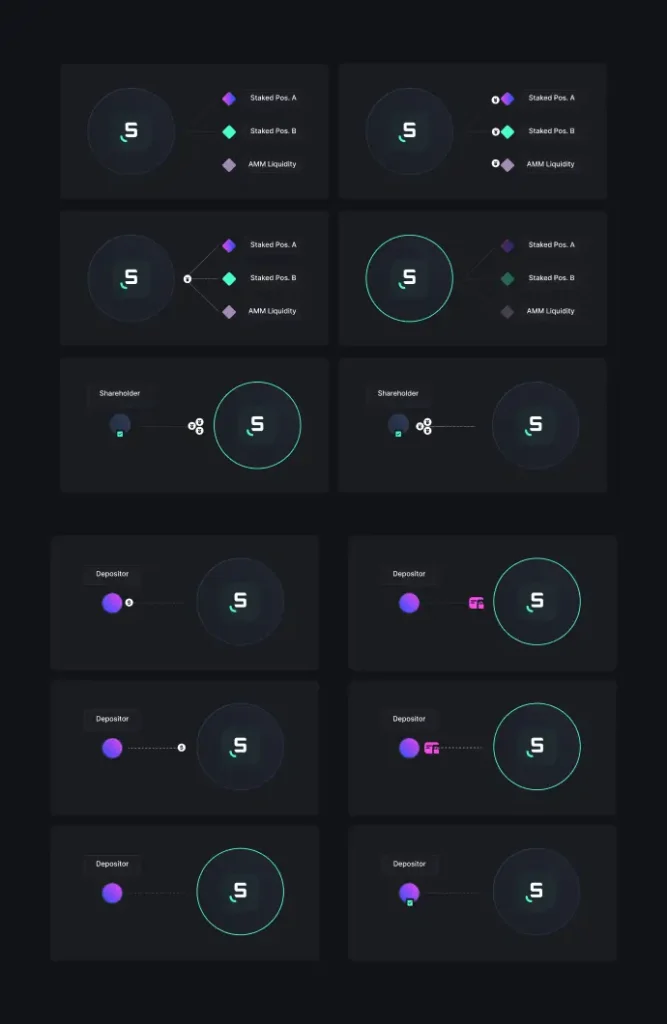
Staking, vesting and allocation each get one picture that survives a screenshot. Souq explains time-locked staking as a five-step carousel on one diagram, drawn in twelve states, with the S monogram in the centre branching to two staked positions and AMM liquidity. Flex draws FLX tokenomics as one donut whose percentages take the colour of their slice, so there is no legend, and KWPC does the same with a 3D torus. The full rules for token allocation charts and the other pre-launch assets are in token launch branding. Dashboards that have to show risk the same way are in DeFi dashboard design.
5. 3D as a family of objects, not coin icons
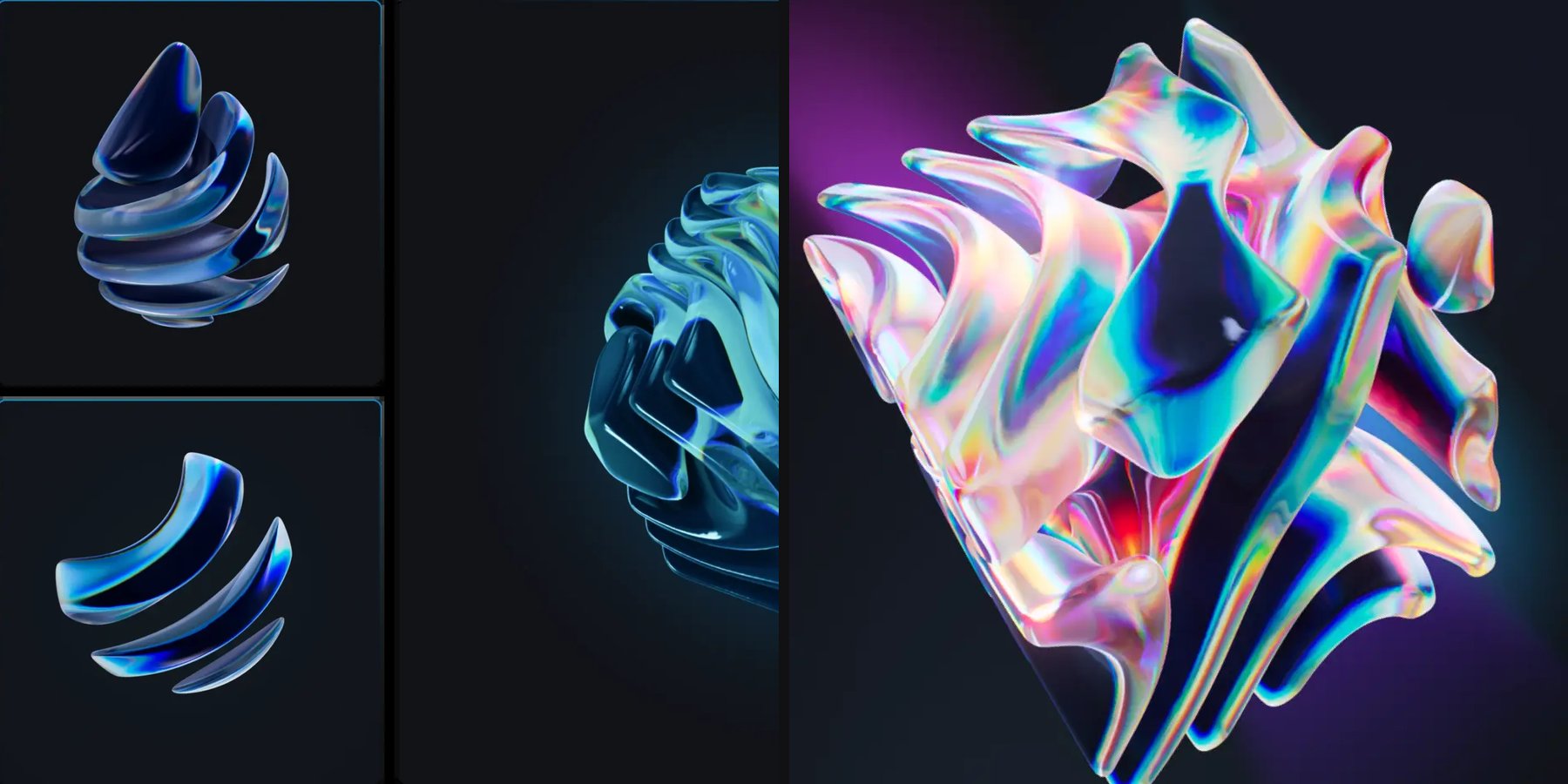
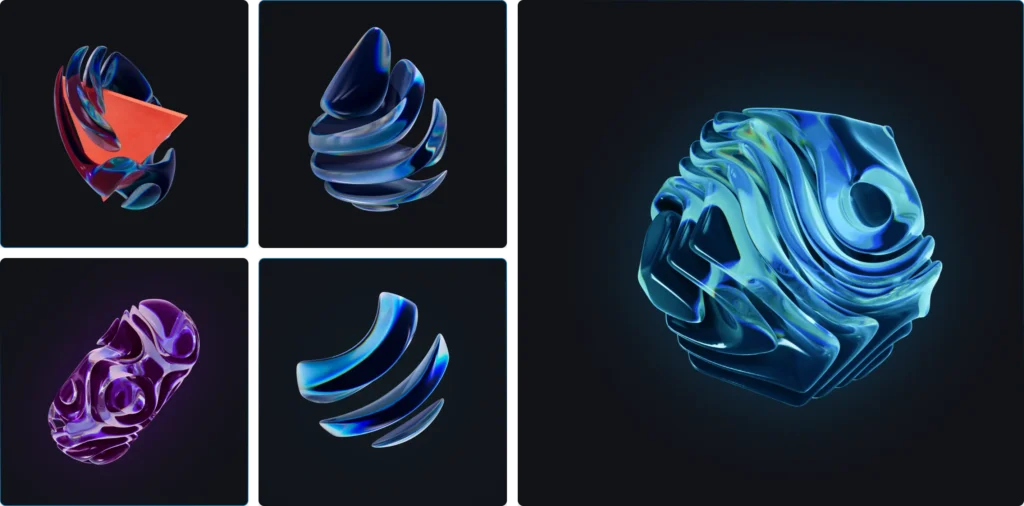
Where 3D stays, it works as a system. On KWPC each product area has its own abstract glass object, all in one material and one lighting setup, so the set reads as a family on the navy background and helps users tell sections apart. Flex gives each idea a glass form lit from the edges: folded petals, a chevron, a whale. Fozeus built its NFT citizens on one character base, a capsule body with a glossy visor, so traits could combine and the series could be generated in the thousands.
How do you brief a web3 product design in 2026?
With the trends above turned into questions. Answer them before you talk to a designer and the brief writes itself.
- Which screen is the product? That screen goes in the hero and on the first product slide.
- List every fee and every state of each action: live, pending, failed, closed. Each one is a design.
- Pick a theme per page type: light where the page sells, dark where the page is a table.
- Name the mechanism people misunderstand most, and plan one diagram for it.
- Decide whether 3D is a family of objects for the whole product or nothing at all.
- Write the wallet connect and signing flow as steps, then design the screens for them.
The five cases above, and the rest of our crypto work, are collected on the UX/UI and web design page.
Key takeaways
- Usage, not headlines, answers the relevance question: stablecoin volume grew while DeFi deposits shrank, so the audience that stays uses the product daily and judges it like a banking app.
- Five things repeat on our screens: the product in the hero, every fee before the button, light themes where the page sells and dark where the data is dense, one diagram per mechanism, and 3D drawn as a family.
- Web3 is not just crypto: the token is one layer under a feed, a table or a chart that any app has, and the design work is in those screens.
Frequently asked questions
Is web3 still relevant, and what do web3 products look like in 2026?
Yes, as infrastructure that moves money every day rather than as a story. Stablecoin volume kept growing while speculative DeFi deposits fell. The products that remain look like financial software with a brand: a working screen in the hero, fees listed before every confirm button, light or dark themes chosen per page, one diagram per mechanism and 3D used as a consistent family of objects.
Is web3 just a buzzword?
The word is overused, the rails are not. Stablecoin transfers, onchain order books, tokenized property and token-gated communities all run today with public, auditable volumes. What did not survive is the idea that a token alone is a product, so the test of any web3 project is whether the screen does something useful without the token story.
What is an example of a web3 product?
A decentralized exchange where orders live on the chain, such as Flex; a portfolio manager with staking vaults for game assets, such as Souq; a platform that sells fractions of income-producing buildings as tokens, such as dEquity; a social network whose members mine a token, such as Fozeus; and a launchpad where token holders vote for projects during a live show, such as KWPC.
Is web3 just crypto?
No. Crypto is the asset and settlement layer. A web3 product also has the same objects as any app, a feed, a chat, a table or a chart, and most of the design work is in those screens. The difference is that a wallet, not a company account, holds the assets and signs the actions.
What is web3 used for?
Trading tokens on exchanges that keep the order book on the chain, earning rewards by locking assets in vaults, owning fractions of real-world assets such as property, running communities and social networks with their own token, and funding new projects through launchpads where holders vote.
Is web3 real or fake?
The infrastructure is real: contracts, balances and volumes can be checked on public blockchains, and the usage figures from a16z and DefiLlama are published with their methods. Fake is the promise that a token alone creates a business, which is why serious products now lead with the working interface rather than with the token.